


Programmes
Diploma in General Nursing and Midwifery (GNM)
-

Undergraduate Level
-

3 Years Duration
 Download Brochure
Overview
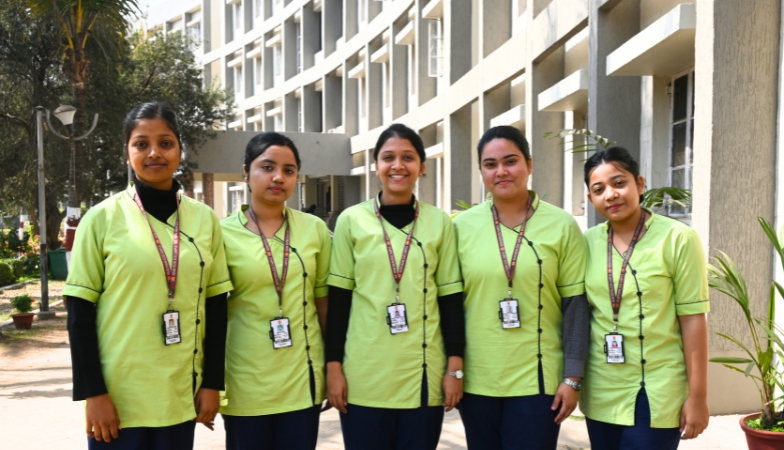
The General Nursing & Midwifery (GNM) programme at NSHM Institute of Health Sciences, Durgapur is a diploma-level professional GNM course designed to prepare competent, compassionate, and skilled nursing professionals to meet the healthcare needs of individuals, families, and communities.
The programme focuses on developing strong foundations in nursing care, midwifery, community health, medical–surgical nursing, pediatric nursing, obstetric and gynecological care, and mental health nursing. Emphasis is placed on patient-centered care, clinical competence, ethical practice, and effective communication, enabling students to function efficiently in diverse healthcare environments.
GNM at NSHM integrates theoretical instruction with extensive practical and clinical GNM nursing course training through hospital postings, community health exposure, and supervised internships. Students gain hands-on experience in maternal and child health, patient care procedures, emergency response, infection control, and health education, ensuring readiness for real- world healthcare challenges.
Guided by experienced nursing faculty and supported by strong hospital affiliations, the GNM programme prepares graduates for careers as staff nurses, community health nurses, midwives, and healthcare assistants in hospitals, nursing homes, primary health centres, and community healthcare settings. The programme also provides a pathway for career advancement and higher education, such as Post Basic B.Sc. Nursing, as per regulatory norms.
At NSHM Durgapur, the GNM programme nurtures nursing professionals who uphold professional ethics, compassion, clinical excellence, and social responsibility, contributing meaningfully to quality healthcare delivery and public health outcomes.
Eligibility
10+2 passed from any recognized board
Candidates appearing for Class XII final can also apply
Programme Educational Objectives
Graduates of this program will:
-
01
Provide safe, competent, and compassionate nursing and midwifery care to individuals, families, and communities.
-
02
Apply nursing knowledge and clinical skills effectively in hospitals, maternity units, and community healthcare settings.
-
03
Demonstrate ethical practice, professional responsibility, and adherence to legal and regulatory nursing standards.
-
04
Collaborate effectively with healthcare teams to promote patient well-being and quality healthcare delivery.
-
05
Pursue career advancement, higher education, and lifelong learning in nursing and allied health sciences.
Programme Outcomes (PO)
-
01
Apply knowledge of nursing, biological, and behavioral sciences in providing holistic patient care.
-
02
Perform nursing procedures competently using the nursing process in medical, surgical, pediatric, and maternity care.
-
03
Provide comprehensive maternal and newborn care during antenatal, intranatal, and postnatal periods.
-
04
Demonstrate effective communication with patients, families, and healthcare professionals.
-
05
Practice nursing within ethical, legal, and professional frameworks ensuring patient dignity and safety.
-
06
Identify and respond appropriately to emergency and critical care situations.
-
07
Promote health education, disease prevention, and community health awareness.
-
08
Work effectively as a member of the multidisciplinary healthcare team in clinical and community settings.
-
09
Maintain accurate nursing records, documentation, and reporting practices.
-
10
Demonstrate readiness for professional nursing practice and continuing education.
Programme Specific Outcomes (PSO)
-
01
Clinical Nursing Practice
Deliver patient-centered nursing care across medical–surgical, pediatric, and mental health settings.
-
02
Midwifery & Maternal Health Care
Provide skilled midwifery services, including safe delivery practices and newborn care.
-
03
Community & Public Health Nursing
Participate effectively in community health programmes, maternal-child health services, and preventive healthcare initiatives.
-
04
Professional Ethics & Patient Safety
Uphold ethical standards, infection control measures, and patient safety protocols in all nursing practices.
-
05
Communication & Health Education
Educate patients, families, and communities to promote health, hygiene, and well-being.
Key Facts
- Curriculum Focus : Medical–Surgical Nursing, Midwifery & Gynecology, Community Health Nursing, Pediatric Nursing, Mental Health Nursing
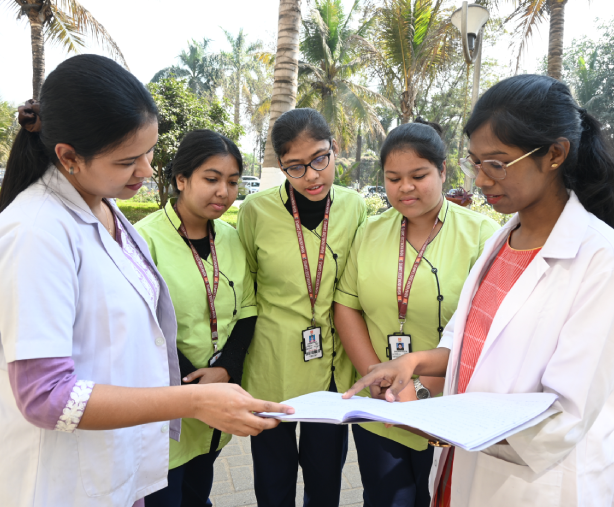
- Teaching Methodology : Theory integrated with extensive clinical and practical training
- Clinical Exposure : Hospital postings, maternity wards, community health centres, and supervised internship
- Skill Development : Patient care, maternal & child health, clinical procedures, communication, and ethics
- Career Opportunities : Staff Nurse, Community Health Nurse, Midwife, Healthcare Assistant
- Higher Study Options : Post Basic B.Sc. Nursing (subject to eligibility norms)
- Learning Infrastructure : Nursing skill labs, simulation labs, and hospital affiliations
- Faculty : Qualified nursing educators and experienced clinical practitioners
Curriculum
Semester-wise syllabus PDF
 Semester - 1
Scholarship
-Eligible students may also avail government and statutory scholarships as applicable. The scholarship framework at NSHM aims to promote inclusive education, academic excellence, and equal access to quality learning.
Terms and eligibility criteria apply as per institutional guidelines.
Highlights/ Advantage
-
INC-Compliant Curriculum aligned with Indian Nursing Council and State Nursing Council norms
-
Strong Clinical & Practical Training through extensive hospital postings and community health exposure
-
Hands-On Midwifery Experience in maternal and child health, labor care, and neonatal services
-
Experienced Nursing Faculty & Clinical Mentors ensuring skill-based and ethical training
-
Simulation-Based Learning for developing confidence in clinical procedures and patient care
-
Focus on Patient-Centred & Compassionate Care with emphasis on ethics and professionalism
-
Career-Ready Diploma Programme leading to immediate employability in healthcare settings
-
Opportunities in Government & Private Healthcare sectors across hospitals and community health centers
-
Pathway to Higher Education such as Post Basic B.Sc. Nursing (as per eligibility norms)
-
Strong Foundation in Community & Public Health Nursing supporting preventive healthcare initiatives
Teaching Pedagogies
-
01
Learner-Centric Pedagogy
The learning environment prioritizes student engagement through active learning strategies and personalized learning pathways, encouraging critical thinking and self-directed growth.
-
02
Outcome-Based Education (OBE)
Programmes are structured around clearly defined outcomes using CO–PO mapping and rubrics- based assessments, ensuring measurable learning achievements aligned with academic and industry standards.
-
03
Experiential & Applied Learning
Students gain hands-on exposure through industry expert lectures, lab- and studio-based work, and application-oriented assignments that bridge theory with practice.
-
04
Technology-Enabled Teaching
Teaching is enhanced with smart classrooms, Learning Management Systems (LMS), and advanced digital tools that promote interactive, blended, and flexible learning.
-
05
Research-Based Teaching
Students are encouraged to explore inquiry-driven learning through research projects, literature review work, and exposure to contemporary research methodologies.
-
06
Problem-Based Learning (PBL)
Real-world relevance is built through case studies and project-based learning, enabling students to solve practical problems collaboratively and creatively.
-
07
Collaborative Learning
Learning is strengthened through group tasks, teamwork, and peer assessment, fostering communication skills, leadership, and mutual learning.
-
08
Skill & Competency-Based Teaching
Alongside academics, students are trained through professional certifications, soft-skill development, and employability-focused modules to enhance career readiness.
-
09
Inclusive Teaching Practices
NSHM promotes equitable learning with bridge courses, academic support systems, and structured student mentoring to cater to diverse learner needs.
-
10
Continuous Assessment & Feedback
Student progress is monitored through assignments, quizzes, presentations, and practical evaluations, supported by timely and constructive feedback.
-
11
Community & Social Learning
Learning extends beyond the classroom through outreach programmes, community engagement, and extension activities that instill social responsibility.
-
12
Faculty Development & Pedagogy Training
Faculty members regularly participate in Faculty Development Programmes (FDPs), pedagogy training, and research workshops to ensure teaching excellence and innovation.
Scope & Career Opportunities
Graduates can work as:
- Staff Nurse in hospitals, nursing homes, and healthcare institutions
- Midwife providing maternal and newborn care
- Community Health Nurse in public health and outreach programmes
- Nursing Assistant / Clinical Support Nurse
- Home Healthcare Nurse
- Primary Healthcare Nurse in PHCs and community centres
Employment Sectors
- Multispecialty hospitals and maternity hospitals
- Government and private healthcare institutions
- Community health centres and primary health units
- NGOs and public health organizations
- Home healthcare and geriatric care services
- Career Progression & Higher Studies
Career Progression & Higher Studies
- Post Basic B.Sc. Nursing (as per eligibility norms)
- Opportunities in government nursing services
- Scope for international nursing careers (subject to licensure requirements)
GNM graduates play a vital role in patient care, maternal health, community wellness, and public health delivery, making it a respected and socially impactful profession. Intake