


Programmes
B.Sc. - Multimedia, Animation & Graphics
-

Undergraduate Level
-

4 Years Duration
 Download Brochure
Overview
NSHM Knowledge Campus is one of Eastern India’s premier educational institutions, renowned for delivering industry-aligned, career-focused education. Backed by dedicated learning spaces, practical studio setups, and an experienced faculty body, NSHM provides an ecosystem where academic learning meets real-world industry practice. Through interdisciplinary learning, hands-on training, and deep industry connections, NSHM equips students with the technical mastery, creative confidence, and professional ethics needed to excel in global creative industries.
The digital media landscape is expanding rapidly—spanning film production, gaming, UI/UX design, visual effects, and digital branding. The B.Sc. in Multimedia, Animation & Graphics is a future-ready undergraduate degree affiliated with MAKAUT. It transforms creative passion into professional expertise through a curriculum that blends art, technology, and cinematic storytelling.
Eligibility
10+2 Passed in any stream from a recognized board
Candidates appearing for Class XII final can also apply.
Programme Educational Objectives
Graduates of this program will:
-
01
Strong Creative and Technical Foundation
Graduates will develop a strong foundation in multimedia, animation, graphic design, visual communication, and digital content creation using industry-standard tools and technologies.
-
02
Professional Competence
Graduates will acquire the knowledge and practical skills required to create innovative multimedia solutions, 2D/3D animations, motion graphics, visual effects, and interactive digital media for diverse industries.
-
03
Industry Readiness and Employability
Graduates will be equipped with industry-relevant expertise through hands-on projects, internships, portfolio development, and exposure to current trends, preparing them for successful careers in the creative and digital media sectors.
-
04
Creativity, Innovation, and Problem Solving
Graduates will demonstrate creativity, critical thinking, and design thinking to conceptualize and deliver engaging visual experiences and effective multimedia solutions.
-
05
Professional Ethics and Collaboration
Graduates will exhibit ethical practices, effective communication, leadership, and teamwork while working in multidisciplinary and multicultural professional environments.
-
06
Lifelong Learning and Entrepreneurship
Graduates will pursue continuous learning, professional certifications, higher education, research, or entrepreneurial ventures to adapt to emerging technologies and evolving trends in multimedia, animation, gaming, and digital entertainment.
Programme Outcomes (PO)
-
01
Creative Knowledge
Apply principles of multimedia, animation, graphic design, visual communication, and digital media to create innovative and effective visual content.
-
02
Problem Analysis
Identify, analyze, and solve design and multimedia communication challenges using creative thinking, design principles, and technical expertise.
-
03
Design & Content Development
Design, develop, and produce high-quality 2D/3D animations, graphics, motion graphics, visual effects, interactive media, and digital content that meet industry standards.
-
04
Research & Innovation
Conduct research, explore emerging trends, and apply innovative approaches to create engaging multimedia experiences and creative solutions.
-
05
Modern Tool Usage
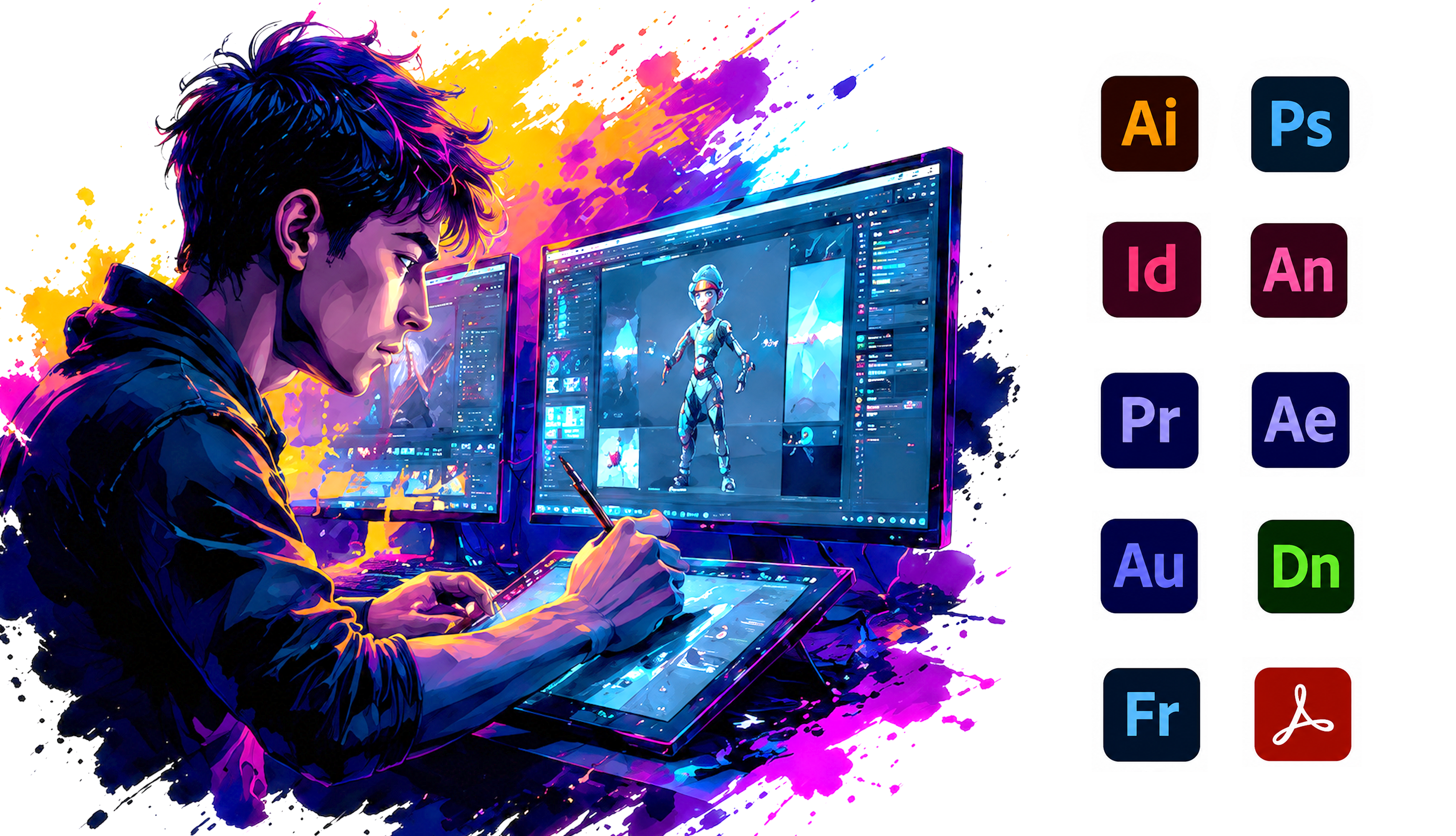
Utilize industry-standard software and technologies such as Adobe Creative Suite, Autodesk Maya, Blender, Unreal Engine, Unity, and other multimedia tools for professional content creation.
-
06
Professional Ethics
Demonstrate ethical practices, intellectual property awareness, social responsibility, and professionalism in the creation and dissemination of digital media.
-
07
Environment & Society
Develop multimedia solutions that are socially responsible, culturally sensitive, accessible, and contribute positively to society and sustainable digital practices.
-
08
Individual & Teamwork
Work effectively as an individual and as a member or leader of multidisciplinary teams in creative, production, and digital media environments.
-
09
Communication
Communicate design concepts, ideas, and project outcomes effectively through visual storytelling, presentations, documentation, and client interactions.
-
10
Project Management & Entrepreneurship
Apply project management principles, budgeting, production planning, and entrepreneurial skills to manage multimedia projects and creative ventures successfully.
-
11
Lifelong Learning
Recognize the need for continuous learning and professional development to keep pace with evolving technologies, design trends, animation techniques, and digital media innovations.
Programme Specific Outcomes (PSO)
-
01
Multimedia Design & Digital Content Creation
Apply the principles of visual communication, graphic design, typography, photography, and digital illustration to create engaging multimedia content for print, web, and digital platforms.
-
02
Animation, Visual Effects & Interactive Media
Develop professional-quality 2D/3D animations, motion graphics, visual effects (VFX), gaming assets, and interactive media using industry-standard software and production workflows.
-
03
Industry-Ready Creative Professional
Demonstrate proficiency in multimedia production, portfolio development, project execution, client communication, and emerging technologies to pursue successful careers or entrepreneurial ventures in animation, gaming, advertising, filmmaking, digital marketing, and the creative media industry.
Key Facts
Rather than traditional textbook learning, our structured curriculum builds expertise across four interconnected creative pillars:
- Design Fundamentals & Visual Literacy Visual Thinking & Aesthetics: Master the core principles of design—line, shape, color theory, texture, balance, contrast, and Gestalt psychology. Drawing & Ideation: Develop essential freehand sketching, shading, perspective, and visual breakdown skills as the foundation for design. Typography & Branding: Explore type anatomy, grid systems, and brand identity design across print and digital media.
- Advanced Graphic & Web Experience (UI/UX) Interactive Web Design: Learn responsive web development using HTML, CSS, and JavaScript to build modern, user-friendly digital interfaces. UI/UX & Prototyping: Conduct user research, construct wireframes, and create interactive digital prototypes tailored for web and mobile platforms. Layout Systems: Master grid-based visual hierarchy, mobile-first design methodologies, and cross platform design consistency.
- Film Technology & Cinematic Language Camera & Lighting Operation: Gain hands-on mastery over professional cine cameras, lens selection, exposure control, and dynamic lighting setups. Sound Engineering: Learn multi-track sound recording, dialogue capture, sound effect design, and post-production audio mixing. Cinematic Storytelling & Aesthetics: Analyze visual composition, pacing, mise-en-scène, color grading, and narrative structure in filmmaking.
- Animation, VFX & Digital Production 2D & 3D Animation: Master character animation, movement physics, environmental art, and digital asset creation. Visual Effects (VFX) & Compositing: Learn green-screen integration, motion graphics, dynamic effects, and digital video editing workflows. Studio Practice & Collaboration: Work in collaborative teams on real-world client briefs to develop industry-level project execution skills.
Curriculum
Semester-wise syllabus PDF
 Semester - 1
Scholarship
Eligible students may also avail government and statutory scholarships as applicable. The scholarship framework at NSHM aims to promote inclusive education, academic excellence, and equal access to quality learning.
Terms and eligibility criteria apply as per institutional guidelines.
Highlights/ Advantage
-
Comprehensive Academic Scope: Covers the entire digital content ecosystem—from basic freehand drawing and typography to complex 3D animation, interactive web development, and cinematic filmmaking.
-
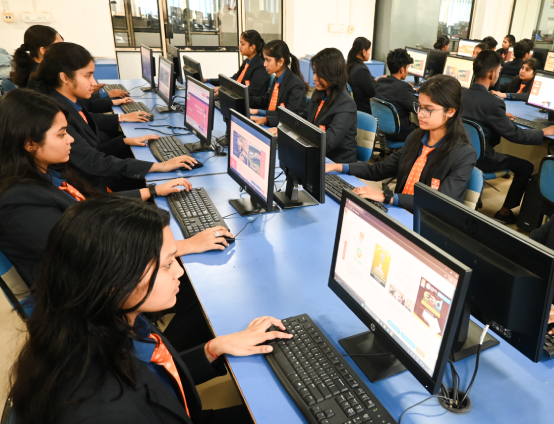
Studio-Driven Learning: Hands-on training in dedicated labs equipped with industry-standard software, essential camera setups, lighting gear, and audio recording environments.
-
Portfolio-Centric Approach: Students build a client-ready, professional portfolio featuring original animation reels, design systems, and cinematic projects before graduation.
-
Design & Management Synergy: Beyond creative skills, students learn project management, client collaboration, and entrepreneurial business strategies.
Teaching Pedagogies
-
01
Learner-Centric Pedagogy
The learning environment prioritizes student engagement through active learning strategies and personalized learning pathways, encouraging critical thinking and self-directed growth.
-
02
Outcome-Based Education (OBE)
Programs are structured around clearly defined outcomes using CO–PO mapping and rubrics-based assessments, ensuring measurable learning achievements aligned with academic and industry standards
-
03
Experiential & Applied Learning
Students gain hands-on exposure through industry expert lectures, lab- and studio-based work, and application-oriented assignments that bridge theory with practice.
-
04
Technology-Enabled Teaching
Teaching is enhanced with smart classrooms, Learning Management Systems (LMS), and advanced digital tools that promote interactive, blended, and flexible learning.
-
05
Research-Based Teaching
Students are encouraged to explore inquiry-driven learning through research projects, literature review work, and exposure to contemporary research methodologies.
-
06
Problem-Based Learning (PBL)
Real-world relevance is built through case studies and project-based learning, enabling students to solve practical problems collaboratively and creatively.
-
07
Collaborative Learning
Learning is strengthened through group tasks, teamwork, and peer assessment, fostering communication skills, leadership, and mutual learning.
-
08
Skill & Competency-Based Teaching
Alongside academics, students are trained through professional certifications, soft-skill development, and employability-focused modules to enhance career readiness.
-
09
Inclusive Teaching Practices
NSHM promotes equitable learning with bridge courses, academic support systems, and structured student mentoring to cater to diverse learner needs.
-
10
Continuous Assessment & Feedback
Student progress is monitored through assignments, quizzes, presentations, and practical evaluations, supported by timely and constructive feedback.
-
11
Community & Social Learning
Learning extends beyond the classroom through outreach programmes, community engagement, and extension activities that instill social responsibility.
-
12
Faculty Development & Pedagogy Training
Faculty members regularly participate in Faculty Development Programmes (FDPs), pedagogy training, and research workshops to ensure teaching excellence and innovation.
Scope & Career Opportunities
- Creative Sector Career Roles Animation & Gaming 2D/3D Animator,
- Character Designer,
- Environment Artist,
- Storyboard Artist Film & Television Production VFX Artist,
- Video Editor,
- Compositor,
- Cinematographer,
- Sound Designer UI/UX & Web Design UI/UX Designer,
- Front-End Web Developer,
- Digital Product Designer Advertising & Graphic Design Graphic Designer,
- Brand Identity Specialist, Motion Graphics Artist,
- Art Director Entrepreneurship Creative Studio Founder,
- Freelance Consultant,
- Digital Content Creator