



Programmes
Master of Computer Applications (MCA)
-

Postgraduate Level
-

2 Years Duration
 Download Brochure
Overview
The Master of Computer Applications (MCA) at NSHM Institute of Computing & Analytics, Durgapur is a postgraduate programme designed to develop highly skilled software professionals and technology leaders equipped to meet the demands of the fast-evolving digital and IT industry. We are one of the top colleges for MCA in West Bengal.
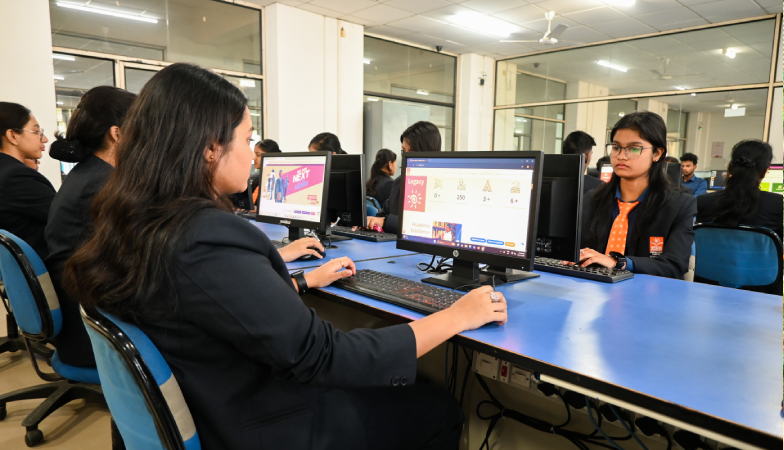
This MCA in Durgapur program offers advanced knowledge in computer science, software engineering, application development, database systems, data structures, cloud computing, analytics, and emerging technologies. With a strong emphasis on practical learning and problem-solving, students gain hands-on experience through advanced computing labs, live projects, internships, and industry-oriented assignments.
The MCA curriculum is industry-aligned and application-driven, enabling learners to design, develop, test, and deploy robust software solutions for real-world business and technological challenges. The programme also focuses on analytical thinking, research orientation, teamwork, communication skills, and ethical computing practices, essential for professional success.
Guided by experienced faculty and supported by strong academic–industry collaborations, the MCA programme at NSHM Durgapur prepares graduates for careers in software development, application engineering, data and analytics roles, cloud and IT services, and technology consulting. The programme also provides a solid foundation for research, doctoral studies, and advanced professional certifications, making it a future-ready pathway in the computing domain.
Eligibility
50% marks 45% marks in case of candidates
Passed any graduation degree (e.g.: B.E. / B.Tech./B.Sc / B.Com. / B.A./ B. Voc./ BCA etc.,) preferably with Mathematics at 10+2 level or at Graduation level Obtained at least 50% marks (45% marks in case of candidates belonging to reserved category) in the qualifying examination.
Programme Educational Objectives
Graduates of this program will:
-
01
Technical Expertise
Study in one of the leading MCA colleges in Durgapur and develop the ability to plan, analyze, design, code, implement, test and maintain the software product for real time systems that are technically sound, economically feasible and socially acceptable
-
02
Successful Career
Exhibit professionalism, ethical attitude with updated technologies in Computer Application based career and capability to set up their own enterprise in various sectors of Computer Applications
-
03
Soft Skills
Develop communication skills, team work and leadership quality in their professional multidisciplinary projects and adapt to current trends by engaging in lifelong learning
-
04
Life Long Learning
Prepare the students to pursue higher studies by acquiring knowledge in mathematical, computing and engineering principles in the field of computing and related fields and to work in the fields of teaching and research
Programme Outcomes (PO)
-
01
Engineering Knowledge
Ability to apply knowledge of computing, science, mathematics and engineering fundamentals appropriate to the discipline.
-
02
Problem Analysis
Ability to identify, critically analyze, formulate the computing requirements appropriate to its solution and develop computer applications.
-
03
Design/Development of Solutions
Ability to design, implement and evaluate a computer-based complex system, process, component, or programme to meet desired needs with appropriate consideration for public health and safety, cultural, societal and environmental considerations
-
04
Conduct Investigations of Complex Problems
Use of research-based knowledge and research methods including design of experiments, analysis and interpretation of data, and synthesis of the information to provide valid conclusions and develop Software with complete satisfaction to the Customer.
-
05
Modern Tool Usage
Ability to apply current technologies, skills, and modern IT tools necessary for computing practice with an understanding of the limitations.
-
06
The Engineer and Society
Ability to understand the impact of system solutions in a contemporary, global, economical, environmental and societal context for sustainable development.
-
07
Environment and Sustainability
Ability to understand the impact of the professional engineering solutions in societal and environmental contexts, and demonstrate the knowledge of, and need for sustainable development.
-
08
Ethics
Ability to discharge their duties with professional and ethical responsibilities as an individual as well as in multidisciplinary teams with positive attitude.
-
09
Individual and Team Work
Ability to function individually in effective manner and on teams, including diverse and multidisciplinary, to accomplish a common goal.
-
10
Communication
Ability to communicate effectively with a range of audiences and be customer friendly.
-
11
Project Management and Finance
Demonstrate knowledge and understanding of the engineering and management principles and apply these to one’s own work, as a member and leader in a team to manage projects and in multidisciplinary environments and should be economically feasible.
-
12
Life-Long Learning
Recognize the need for, and have the preparation and ability to engage in independent and life-long learning in the broadest context of technological changes.
Programme Specific Outcomes (PSO)
-
01
Software System Design and Development:
The ability to apply software development life cycle principles to design and develop the application software that meets the automation needs of society and industry.
-
02
Computing and Research ability
The ability to employ modern computer languages, environments and platforms in creating innovative career paths in SMAC (Social, Mobile, Analytics and Cloud) technologies.
-
03
Professionalism and Ethics
Efficient team leaders, effective communicators and capable of working in multi-disciplinary environment following ethical values.
Key Facts
- Curriculum Focus: Advanced programming, software engineering, databases, application development
- Emerging Technologies Covered: AI basics, data analytics, cloud computing, automation tools
- Teaching Approach: Industry-oriented, practical, and application-based learning
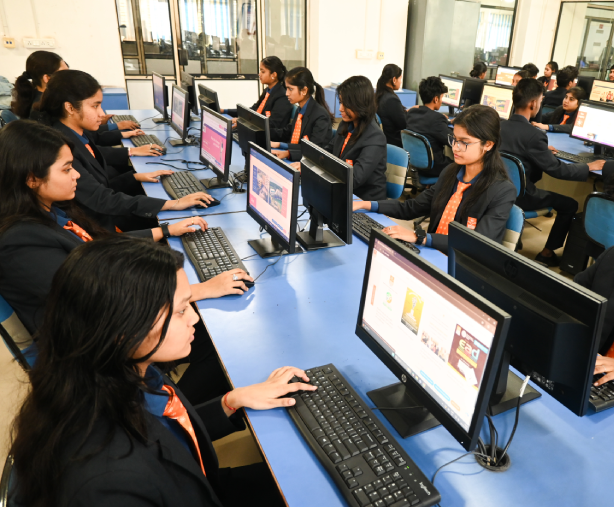
- Practical Exposure: Advanced labs, live projects, internships, and industry interaction
- Career Pathways: Software Engineer, Application Developer, Data Analyst, System Architect
- Higher Study Options: Ph.D, research roles, and advanced professional certifications
- Learning Infrastructure: Modern computing labs, cloud platforms, smart classrooms
- Faculty: Experienced academicians and industry professionals
Curriculum
Semester-wise syllabus PDF
 Semester-1
Scholarship
Eligible students may also avail government and statutory scholarships as applicable. The scholarship framework at NSHM aims to promote inclusive education, academic excellence, and equal access to quality learning.
Terms and eligibility criteria apply as per institutional guidelines.
Highlights/ Advantage
-
Industry-Aligned MCA Curriculum to enhance employability and practical skills
-
Strong Technical Depth in programming, databases, software engineering, and system design
-
Hands-On Learning Approach through advanced labs, live projects, and internships
-
Exposure to Emerging Technologies including AI, data analytics, cloud computing, and modern frameworks
-
Industry Collaborations & Certifications focused on advanced computing and software development
-
Focus on Professional Skills including problem-solving, teamwork, and ethical computing
-
Career & Placement Support across IT, software services, and technology domains
-
Modern Computing Infrastructure with advanced labs, cloud platforms, and smart classrooms
-
Experienced Faculty with academic excellence and industry exposure
-
Pathways to Higher Studies & Research including PhD and advanced technology certifications
Teaching Pedagogies
-
01
Learner-Centric Pedagogy
The learning environment prioritizes student engagement through active learning strategies and personalized learning pathways, encouraging critical thinking and self-directed growth.
-
02
Outcome-Based Education (OBE
Programmes are structured around clearly defined outcomes using CO–PO mapping and rubrics-based assessments, ensuring measurable learning achievements aligned with academic and industry standards.
-
03
Experiential & Applied Learning
Students gain hands-on exposure through industry expert lectures, lab- and studio-based work, and application-oriented assignments that bridge theory with practice.
-
04
Technology-Enabled Teaching
Teaching is enhanced with smart classrooms, Learning Management Systems (LMS), and advanced digital tools that promote interactive, blended, and flexible learning.
-
05
Research-Based Teaching
Students are encouraged to explore inquiry-driven learning through research projects, literature review work, and exposure to contemporary research methodologies.
-
06
Problem-Based Learning (PBL)
Real-world relevance is built through case studies and project-based learning, enabling students to solve practical problems collaboratively and creatively.
-
07
Collaborative Learning
Learning is strengthened through group tasks, teamwork, and peer assessment, fostering communication skills, leadership, and mutual learning.
-
08
Skill & Competency-Based Teaching
Alongside academics, students are trained through professional certifications, soft-skill development, and employability-focused modules to enhance career readiness.
-
09
Inclusive Teaching Practices
NSHM promotes equitable learning with bridge courses, academic support systems, and structured student mentoring to cater to diverse learner needs.
-
10
Continuous Assessment & Feedback
Student progress is monitored through assignments, quizzes, presentations, and practical evaluations, supported by timely and constructive feedback.
-
11
Community & Social Learning
earning extends beyond the classroom through outreach programmes, community engagement, and extension activities that instil social responsibility.
-
12
Faculty Development & Pedagogy Training
Faculty members regularly participate in Faculty Development Programmes (FDPs), pedagogy training, and research workshops to ensure teaching excellence and innovation.
Scope & Career Opportunities

- Software Engineer / Software Developer Designing, developing, and maintaining software applications and systems.
- Application Developer Building web, mobile, and enterprise-level applications using modern frameworks.
- Data Analyst / Junior Data Scientist Analyzing data to support business decisions using analytics and visualization tools.
- Web Developer / Full Stack Developer Developing dynamic websites and full-stack applications.
- System Analyst Analyzing system requirements and designing efficient IT solutions.
- Cloud & DevOps Support Engineer Working with cloud platforms, deployment pipelines, and system optimization.
- Database Administrator / Data Engineer (Entry Level) Managing databases, data integrity, and performance optimization.
- Cybersecurity & IT Support Roles Supporting system security, network infrastructure, and IT operations.
- Technical Consultant Providing technology solutions and consulting support to organizations.
Industry Sectors
MCA graduates find opportunities across a wide range of sectors, including:
- IT & Software Services
- Web and Mobile Application Development
- Banking, Financial Services & FinTech
- E-commerce & Digital Platforms
- Healthcare IT & HealthTech
- Cloud Computing & SaaS Companies
- Start-ups and Technology Enterprises
- Government & Public Sector IT Projects
Higher Education & Growth Pathways
- PhD in Computer Applications / Computer Science
- Advanced Certifications in AI, Data Science, Cloud, Cybersecurity, Full Stack Development
- Entrepreneurship & Start-ups in software and digital services