



Programmes
B.Tech. - Computer Science and Engineering (Artificial Intelligence) (Lateral Entry)
-

Undergraduate Level
-

3 Years Duration
 Download Brochure

Overview
The B.Tech in Computer Science & Engineering (Artificial Intelligence) at NSHM Institute of Engineering and Technology is a future-focused undergraduate programme designed to build AI-driven problem solvers and industry-ready engineers. The programme integrates strong computer science fundamentals with advanced learning in Artificial Intelligence, Machine Learning, Deep Learning, Data Analytics, and Intelligent Systems.
With an industry-aligned curriculum, students gain hands-on exposure through advanced laboratories, live projects, internships, hackathons, and global certification pathways. The course emphasizes both theoretical depth and practical application, enabling learners to design intelligent algorithms, develop smart applications, and work with real-world datasets.
Backed by AICTE approval and MAKAUT affiliation, the programme prepares graduates for high-demand careers in AI engineering, data science, automation, cloud computing, and emerging digital technologies. Strong industry collaborations, expert faculty mentorship, and a robust placement ecosystem ensure students are well-equipped to succeed in the rapidly evolving AI-driven technology landscape.
Eligibility
Passed Diploma or B.Sc. degree
Passed a 3-year Diploma in Engineering/Technology from an AICTE-approved institution or a B.Sc. degree from a recognized university with a minimum of 45% aggregate marks (40% for SC/ST/OBC-A/OBC-B/PWD candidates). B.Sc. candidates must also have passed Class 12.
Programme Educational Objectives
Graduates of this program will:
-
01
Foundational & Computational Design
Establish a robust engineering and computational foundation in Computer Science and Artificial Intelligence, enabling them to effectively design, implement, and deploy intelligent, efficient solutions for intricate technical and societal challenges..
-
02
Analytical Leadership & Knowledge Creation
Apply advanced analytical and research methodologies, exhibiting innovative thinking to generate meaningful insights from data, thereby contributing actively to the advancement of knowledge and cutting-edge AI technology.
-
03
Professional Adaptability & Lifelong Learning
Embrace a mindset of continuous professional development, quickly adopting and mastering emerging tools, technologies, and methodologies within the rapidly evolving landscape of Artificial Intelligence and related computational domains.
-
04
Ethical Practice & Societal Awareness
Maintain the highest standards of professionalism and ethical responsibility, demonstrating an acute awareness of the broader societal, environmental, and ethical implications of intelligent systems in their engineering practice.
-
05
Teamwork, Leadership, and Communication
Effectively collaborate as skilled individuals and leaders within diverse, multidisciplinary teams, utilizing strong communication, technical, and project management capabilities to successfully achieve complex organizational and engineering objectives.
Programme Outcomes (PO)
-
01
Engineering Knowledge
Apply core knowledge from mathematics, basic sciences, computer engineering fundamentals, and specialized Artificial Intelligence principles to the analysis and solution of complex data-centric problems.
-
02
Design & Development of Solutions
Design, conceptualize, and develop data-driven systems, processes, components, or programmes that meet specified performance requirements while prioritizing public safety, ethical considerations, and environmental sustainability.
-
03
Conduct Investigations of Complex Problems
Employ research-based methods, including effective data modeling, literature surveys, and experimental design, to analyze, synthesize, and interpret data for generating valid inferences and informed decisions.
-
04
Modern Tool Usage
Select, adapt, and skillfully apply appropriate Artificial Intelligence tools, state-of-the-art techniques, and modern computing platforms (such as Python, AI frameworks, and cloud services) for the rigorous development and evaluation of efficient solutions.
-
05
The Engineer and Society
Apply contextual knowledge to professionally assess the relevant societal, health, safety, legal, and cultural implications of utilizing intelligent and data-driven technologies in professional engineering practice.
-
06
The Engineer and Society
Apply contextual knowledge to professionally assess the relevant societal, health, safety, legal, and cultural implications of utilizing intelligent and data-driven technologies in professional engineering practice.
-
07
Environment and Sustainability
Understand and evaluate the impact of Artificial Intelligence and computing solutions in both societal and environmental contexts, demonstrating a commitment to principles of resource efficiency and technological sustainability.
-
08
Ethics
Uphold ethical principles and adhere to professional ethics, responsibilities, data integrity, and strict confidentiality rules in all aspects of engineering practice related to data handling and intelligent system deployment.
-
09
Individual and Team Work
Function effectively, both autonomously as an individual and collaboratively as a dedicated member or leader, within diverse and highly multidisciplinary technical teams.
-
10
Communication
Communicate complex technical information effectively with both the engineering community and the public, including the generation of coherent technical reports, delivering formal presentations, and articulating clear, data-driven insights.
-
11
Project Management and Finance
Demonstrate a comprehensive knowledge and understanding of engineering and management principles to lead and manage projects, resources, and finance effectively within multidisciplinary environments.
-
12
Lifelong Learning
Recognize the necessity for, and possess the ability to engage in, continuous and independent lifelong learning, keeping pace with the rapid technological advancements in Artificial Intelligence and allied computational domains.
Programme Specific Outcomes (PSO)
-
01
Data Analytics and Insight Generation
Apply advanced statistical, machine learning, and analytical techniques to efficiently collect, process, and interpret complex datasets, enabling robust predictive modeling and evidence-based decision-making.
-
02
Intelligent System Design
Design, engineer, and validate high-performance intelligent systems and applications utilizing core concepts of machine learning, deep learning, and big data technologies to address sophisticated, real-world challenges across diverse domains.
-
03
Data Engineering and Ethical Practice
Implement scalable and efficient data management, storage, and processing solutions using modern data engineering frameworks, while consistently adhering to strict ethical standards, data privacy regulations, and security protocols.
Key Facts

- Core Areas Covered: Algorithms, Computer Architecture, Data Structures, Formal Language & Automata Theory, Programming, Software Engineering, Database Systems, Operating Systems, Computer Networks
- Advanced Domains: Artificial Intelligence, Machine Learning, Cloud Computing, Cybersecurity, Artificial Intelligence , IoT
- Learning Approach: Theory combined with hands-on labs, projects and industry internships
- Infrastructure: Modern computing labs, high-performance systems and access to development tools
- Industry Exposure: Workshops, expert talks, hackathons and industrial training
- Career Prospects: Software Developer, Data Scientist, AI Engineer, Data Analytics, Cybersecurity Analyst, Cloud Engineer, System Architect, Researcher
- Placement Support: Pre-placement training, technical grooming and strong industry connect
- Higher Studies Pathways: M.Tech, MS, MBA, research programmes and global certifications
Curriculum
Semester-wise syllabus PDF
 Semester - 3
Scholarship
Eligible students may also avail government and statutory scholarships as applicable. The scholarship framework at NSHM aims to promote inclusive education, academic excellence, and equal access to quality learning.
Terms and eligibility criteria apply as per institutional guidelines.
Highlights/ Advantage
-
Advanced Interdisciplinary Core
Our curriculum integrates foundational Computer Science principles (Algorithms, Data Structures), core Mathematics, and Statistical modeling with deep specialization in Artificial Intelligence, Machine Learning, and Big Data Engineering.
-
Direct Industry Relevance
The programme is co-designed with leading tech experts and AI professionals, ensuring immediate alignment between our coursework and the cutting-edge technologies, tools, and methodologies currently dominating the industry.
-
Project-Centric, Hands-on Learning
We prioritize practical skill development through intensive lab work, immersive mini-projects, mandatory industry internships, and a significant capstone experience using authentic, complex datasets.
-
Mastery of Essential AI & Data Tools
Students gain practical command over the core technology stack required for AI development, including Python (with frameworks like TensorFlow/PyTorch), R, SQL, cloud platforms, Big Data frameworks (Hadoop/Spark), and advanced visualization tools (Tableau/Power BI).
-
Engineering & Analytical Prowess
We build a strong foundation in quantitative reasoning, computational problem-solving, and critical thinking—essential skills for designing and evaluating intelligent systems.
-
Opportunities for Research and Innovation
Students are actively encouraged to engage in faculty-led research, internal hackathons, and global data challenges, fostering a culture of innovation and high-impact intellectual contribution.
-
Commitment to Ethical AI
A core component of our training involves courses dedicated to data privacy, AI ethics, fairness, and the societal impact of technology, ensuring graduates are responsible and ethical pioneers.
-
High Career Demand
Exceptional job prospects in high-value roles like ML Engineer, Data Scientist, and AI Developer.
-
Future-Proof Skills
Expertise (AI/ML) is essential and resilient across nearly all industries (Healthcare, Finance, Automotive, etc.).
-
Top Compensation
Competitive earning potential due to specialized, high-impact work.
-
Cutting-Edge Skills
Powerful blend of core CSE principles (algorithms, software engineering) with advanced AI techniques (Deep Learning, Computer Vision).
-
AI Stack Mastery
Practical command over industry tools like Python (PyTorch/TensorFlow), SQL, and Big Data frameworks.
-
Real-World Impact
Ability to drive transformative innovation in autonomous systems, personalized medicine, and smart technologies.
-
Research Opportunities
Active engagement in faculty research, hackathons, and global data challenges.
-
Ethical Leadership
Training in data privacy, fairness, and responsible AI deployment, preparing you to lead with integrity.
Teaching Pedagogies
-
01
Learner-Centric Pedagogy
The learning environment prioritizes student engagement through active learning strategies and personalized learning pathways, encouraging critical thinking and self-directed growth.
-
02
Outcome-Based Education (OBE)
Programmes are structured around clearly defined outcomes using CO–PO mapping and rubrics-based assessments, ensuring measurable learning achievements aligned with academic and industry standards.
-
03
Experiential & Applied Learning
Students gain hands-on exposure through industry expert lectures, lab- and studio-based work, and application-oriented assignments that bridge theory with practice.
-
04
Technology-Enabled Teaching
Teaching is enhanced with smart classrooms, Learning Management Systems (LMS), and advanced digital tools that promote interactive, blended, and flexible learning.
-
05
Research-Based Teaching
Students are encouraged to explore inquiry-driven learning through research projects, literature review work, and exposure to contemporary research methodologies.
-
06
Problem-Based Learning (PBL)
Real-world relevance is built through case studies and project-based learning, enabling students to solve practical problems collaboratively and creatively.
-
07
Collaborative Learning
Learning is strengthened through group tasks, teamwork, and peer assessment, fostering communication skills, leadership, and mutual learning.
-
08
Skill & Competency-Based Teaching
Alongside academics, students are trained through professional certifications, soft-skill development, and employability-focused modules to enhance career readiness.
-
09
Inclusive Teaching Practices
NSHM promotes equitable learning with bridge courses, academic support systems, and structured student mentoring to cater to diverse learner needs.
-
10
Continuous Assessment & Feedback
Student progress is monitored through assignments, quizzes, presentations, and practical evaluations, supported by timely and constructive feedback.
-
11
Community & Social Learning
Learning extends beyond the classroom through outreach programmes, community engagement, and extension activities that instil social responsibility.
-
12
Faculty Development & Pedagogy Training
Faculty members regularly participate in Faculty Development Programmes (FDPs), pedagogy training, and research workshops to ensure teaching excellence and innovation.
Scope & Career Opportunities
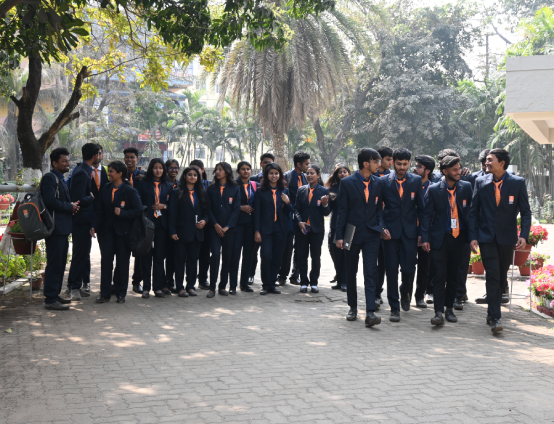
Computer Science and Engineering offers one of the widest career scopes among all engineering fields. The rapid growth of digital systems, automation and data-driven decision making has created a strong demand for skilled professionals across all sectors. Graduates can build careers in software, research, product development, consulting and several emerging technology domains.
- Design, build and maintain applications, systems and digital solutions used across industries.
Software Developer / Software Engineer
- Work with large datasets, uncover insights and support intelligent decision making.
Data Scientist / Data Analyst
- Develop intelligent systems, predictive models and automation tools.
AI and Machine Learning Engineer
- Protect digital infrastructure, manage security operations and respond to cyber threats.
Cybersecurity Analyst
- Manage cloud platforms, deployment pipelines and scalable architectures.
Cloud Engineer / DevOps Engineer
- Build end-to-end web and mobile applications.
Full Stack Developer
- Maintain enterprise networks, servers and IT infrastructure.
Network and System Administrator
- Support product development, customer solutions and technology integration.
Product Engineer / Technical Consultant
- Contribute to advanced research, innovation and teaching.
Researcher / Academic Professional
- Build technology-driven products and solutions for real-world challenges.
Entrepreneur / Startup Founder