


Programmes
B.Sc. - Medical Lab Technology
-

Undergraduate Level
-

4 Years Duration
 Download Brochure
Overview
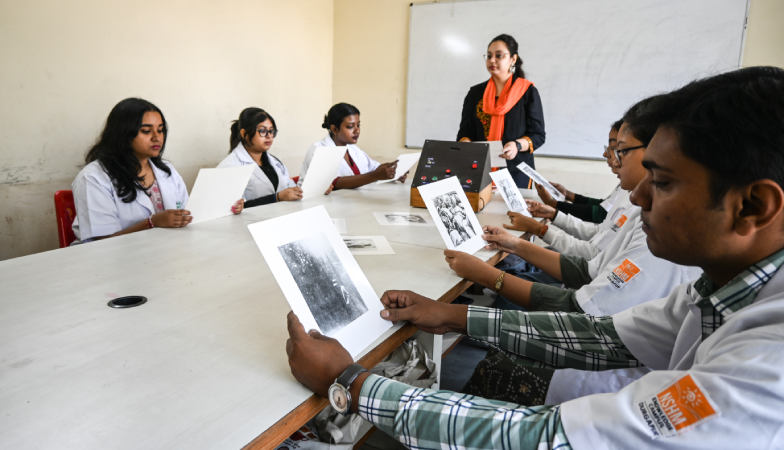
The Bachelor of Medical Laboratory Technology (BMLT) at NSHM Institute of Health Sciences, Durgapur is a comprehensive undergraduate programme designed to develop skilled medical laboratory professionals who play a critical role in disease diagnosis, treatment monitoring, and preventive healthcare.
The programme provides strong foundations in clinical biochemistry, hematology, microbiology, pathology, immunology, and diagnostic techniques, along with hands-on training in modern laboratory practices. Emphasis is placed on accuracy, quality control, laboratory safety, and ethical standards, ensuring students are prepared to meet the demands of clinical and diagnostic laboratories.
With a balanced blend of theoretical knowledge and extensive practical exposure, students gain real-world experience through well-equipped laboratories, hospital postings, internships, and industry interaction. The curriculum is aligned with current healthcare and diagnostic industry requirements, enabling learners to work confidently with advanced instruments, automation systems, and standard laboratory protocols.
Guided by experienced faculty and supported by strong hospital and diagnostic centre linkages, the BMLT programme prepares graduates for careers in hospitals, diagnostic laboratories, pathology labs, research institutions, public health organizations, and healthcare services. The programme also lays a solid foundation for higher studies, specialization, and career advancement in medical laboratory sciences.
At NSHM, the Bachelor of Medical Laboratory Technology nurtures professionals who combine technical expertise, scientific accuracy, and professional integrity, making them vital contributors to the healthcare delivery system.
Eligibility
10+2 from any recognized board
Programme Educational Objectives
Graduates of this program will:
-
01
Apply foundational knowledge of medical laboratory sciences to perform routine and specialized diagnostic tests accurately in clinical laboratory settings.
-
02
Demonstrate proficiency in operating modern laboratory instruments, following quality control measures, and maintaining laboratory safety standards.
-
03
Uphold ethical principles, patient confidentiality, and regulatory compliance while contributing responsibly to healthcare services.
-
04
Collaborate effectively with healthcare professionals and adapt to evolving diagnostic technologies and laboratory practices.
-
05
Pursue career advancement, specialization, higher education, or lifelong learning in medical laboratory technology and allied health sciences.
Programme Outcomes (PO)
-
01
Knowledge Application
Apply fundamental and advanced knowledge of medical sciences (anatomy, physiology, biochemistry, pathology, microbiology, etc.) to perform and interpret clinical laboratory procedures.
-
02
Laboratory Skills
Demonstrate proficiency in operating, calibrating, and maintaining modern laboratory equipment, including automated analyzers, to conduct accurate diagnostic tests in haematology, clinical pathology, immunology, microbiology, histotechnology, and molecular diagnostics.
-
03
Data Analysis & Interpretation
Analyze, interpret, and validate laboratory data to identify anomalies, correlate results with clinical conditions, and provide accurate, reliable results for disease diagnosis and monitoring.
-
04
Quality Assurance & Laboratory Safety
Implement and adhere to stringent quality control (QC) and quality assurance (QA) protocols, along with established biosafety and biosecurity measures, to ensure the accuracy of results and a safe working environment.
-
05
Problem Solving & Critical Thinking
Identify, investigate, and troubleshoot discrepancies in laboratory test results, instrument malfunctions, and procedural errors using logical reasoning and evidence-based practices.
-
06
Communication
Effectively communicate laboratory findings, their significance, and limitations through clear, concise, and accurate written and verbal reports to healthcare professionals, contributing to patient care management.
-
07
Ethics and Professionalism
Uphold the highest standards of professional ethics, integrity, patient confidentiality, and legal responsibilities in all aspects of laboratory practice.
-
08
Project Management & Finance
Demonstrate knowledge of laboratory management principles, including resource and inventory management, and understand the economic aspects of laboratory operations within the healthcare system.
-
09
Individual and Teamwork
Function effectively as an individual and as a member or leader in diverse healthcare teams, collaborating with physicians, nurses, and other health professionals to achieve optimal patient outcomes.
Programme Specific Outcomes (PSO)
-
01
Diagnostic Expertise
Demonstrate comprehensive technical expertise in performing a wide range of diagnostic analyses across core laboratory disciplines (Clinical Biochemistry, Haematology, Histotechnology, Clinical Pathology, Microbiology, and Blood Banking) to produce precise and clinically relevant data.
-
02
Integrated Disease Correlation
Synthesize laboratory findings from multiple disciplines to aid in the diagnosis, prognosis, and therapeutic monitoring of diseases, understanding the pathophysiology behind result patterns.
-
03
Technological Proficiency and Innovation
Operate, manage, and adapt to emerging technologies and automation in the clinical laboratory, and apply molecular and immuno-diagnostic techniques for advanced patient care and diagnostics.
Key Facts
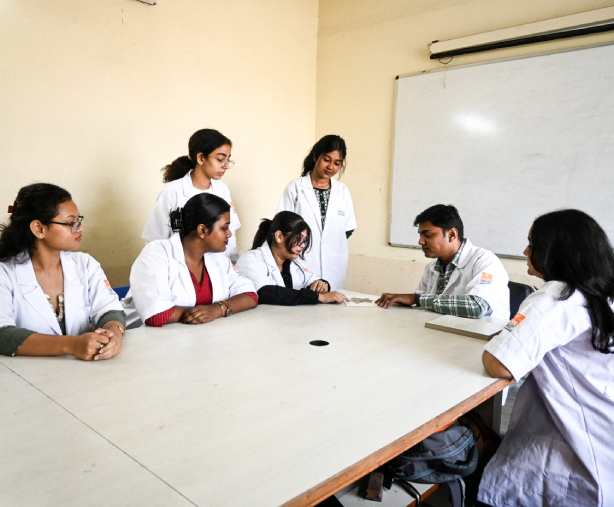
- Core Subjects: Hematology, Biochemistry, Microbiology, Pathology, Immunology, Immunohematology
- Training:Includes practical sessions and hospital internships
- Career Options:Medical Laboratory Technologist, Lab Manager, Quality Control Officer, Research Assistant
- Employment Areas: Hospitals, Diagnostic Centers, Blood Banks, Research Institutes
- Higher Studies: M.Sc. in MLT, Public Health, or related fields
- Key Skill Developed: Accuracy, analytical ability, and technical expertise in laboratory diagnostics
Curriculum
Semester-wise syllabus PDF
 Semester - 1
 Scholarship
Eligible students may also avail government and statutory scholarships as applicable. The scholarship framework at NSHM aims to promote inclusive education, academic excellence, and equal access to quality learning.
Terms and eligibility criteria apply as per institutional guidelines.
Highlights/ Advantage
-
A 4-year undergraduate programme with a focus on medical laboratory diagnostics.
-
Provides in-depth knowledge of subjects like Biochemistry, Microbiology, Hematology, and Pathology.
-
Includes practical training and internships in reputed hospitals and diagnostic centers.
-
Emphasizes hands-on experience with modern laboratory instruments and techniques.
-
Offers opportunities for research and advanced studies in clinical laboratory sciences.
-
High demand for skilled lab technologists in hospitals, research labs, and diagnostic centers.
-
Stable and respected career in the healthcare sector.
-
Scope for career growth as Laboratory Manager, Quality Officer, or Research Assistant.
-
Eligibility for postgraduate studies like M.Sc. MLT, MPH, or MBA in Healthcare.
-
Contributes directly to accurate diagnosis and effective patient care, playing a vital role in the medical field.
Teaching Pedagogies
-
01
Learner-Centric Pedagogy
The learning environment prioritizes student engagement through active learning strategies and personalized learning pathways, encouraging critical thinking and self-directed growth.
-
02
Outcome-Based Education (OBE)
Programmes are structured around clearly defined outcomes using CO–PO mapping and rubrics-based assessments, ensuring measurable learning achievements aligned with academic and industry standards.
-
03
Experiential & Applied Learning
Students gain hands-on exposure through industry expert lectures, lab- and studio-based work, and application-oriented assignments that bridge theory with practice.
-
04
Technology-Enabled Teaching
Teaching is enhanced with smart classrooms, Learning Management Systems (LMS), and advanced digital tools that promote interactive, blended, and flexible learning.
-
05
Research-Based Teaching
Students are encouraged to explore inquiry-driven learning through research projects, literature review work, and exposure to contemporary research methodologies.
-
06
Problem-Based Learning (PBL)
Real-world relevance is built through case studies and project-based learning, enabling students to solve practical problems collaboratively and creatively.
-
07
Collaborative Learning
Learning is strengthened through group tasks, teamwork, and peer assessment, fostering communication skills, leadership, and mutual learning.
-
08
Skill & Competency-Based Teaching
Alongside academics, students are trained through professional certifications, soft-skill development, and employability-focused modules to enhance career readiness.
-
09
Inclusive Teaching Practices
NSHM promotes equitable learning with bridge courses, academic support systems, and structured student mentoring to cater to diverse learner needs.
-
10
Continuous Assessment & Feedback
Student progress is monitored through assignments, quizzes, presentations, and practical evaluations, supported by timely and constructive feedback.
-
11
Community & Social Learning
Learning extends beyond the classroom through outreach programmes, community engagement, and extension activities that instill social responsibility.
-
12
Faculty Development & Pedagogy Training
Faculty members regularly participate in Faculty Development Programmes (FDPs), pedagogy training, and research workshops to ensure teaching excellence and innovation.
Scope & Career Opportunities
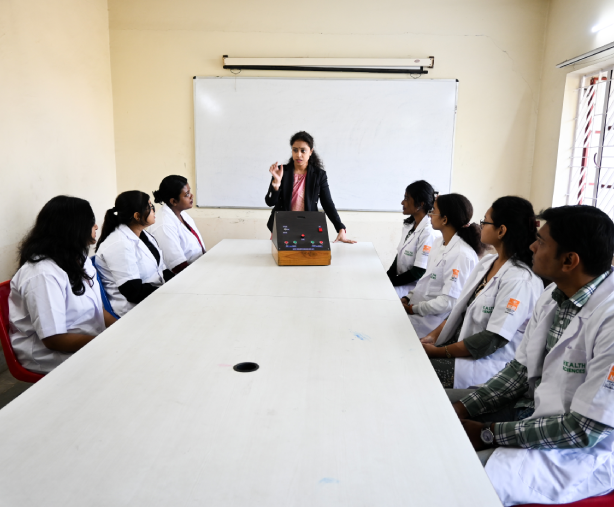
- Expanding need for skilled laboratory professionals in hospitals, clinics, and diagnostic labs.
- Opportunities in pathology, microbiology, biochemistry, hematology, and immunology labs.
- Scope for higher education in specialized or allied fields like M.Sc. MLT, Biotechnology, or Public Health.
- Potential to work in research organizations, pharmaceutical companies, and forensic labs.
- Option to start independent diagnostic or collection centers after gaining experience.
- Medical Laboratory Technologist
- Laboratory Manager / Supervisor
- Quality Control Officer
- Pathology / Biochemistry / Microbiology Technician
- Research Assistant / Scientist
- Blood Bank or Hospital Lab Coordinator
- Public Health Laboratory Officer
- Teaching and Academic positions after higher studies
- Overall, the BMLT programme ensures a stable, respected, and impactful career with diverse opportunities in both clinical and research domains.