




 Download Brochure
Overview
The Bachelor of Optometry (B. Optometry) is a comprehensive undergraduate programme designed to train students in eye care, vision science, and clinical optometry. This Optometry course in West Bengal focuses on developing skilled optometry professionals capable of diagnosing vision problems, managing eye disorders, and providing primary eye care services.
The B. Optometry programme combines strong theoretical foundations with extensive hands-on clinical training. The curriculum covers key areas such as ocular anatomy and physiology, optics, clinical refraction, ophthalmic instruments, binocular vision, contact lenses, ocular diseases, and public health optometry.
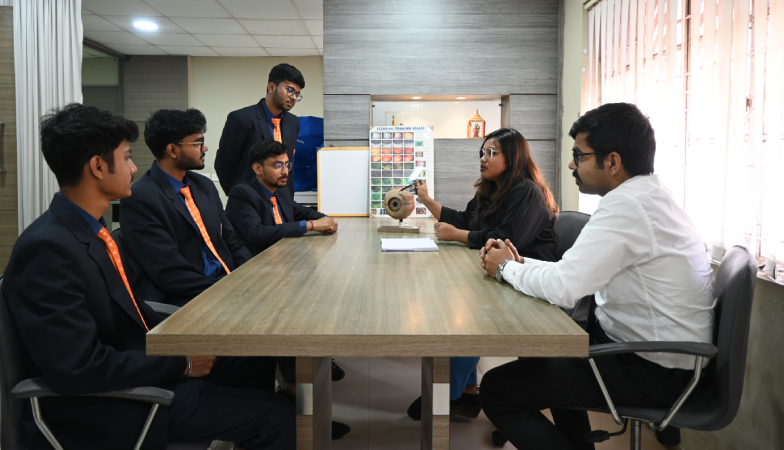
A significant emphasis is placed on practical learning, including laboratory work, clinical postings, and internships in hospitals and vision care centers. This ensures students gain real-world exposure and professional competence.
Graduates of the B. Optometry programme are prepared for careers as clinical optometrists, vision care specialists, eye care consultants, or can pursue higher studies and specialization in optometry and vision sciences. The programme is ideal for students aspiring to build a rewarding career in the rapidly growing healthcare and eye care sector.
Eligibility
10+2 Science (PCM/B) from a recognized board
Programme Educational Objectives
Graduates of this program will:
-
01
Perform comprehensive eye examinations and diagnose a wide range of ocular conditions, including refractive errors and pathologies.
-
02
Prescribe and dispense corrective lenses, such as spectacles and contact lenses
-
03
Provide vision therapy to enhance vision and other therapeutic treatments
-
04
Utilize and manage modern optometric instruments for laboratory and clinical diagnostics.
-
05
Handle the management and treatment of visual system disorders and associated systemic diseases.
Programme Outcomes (PO)
-
01
Disciplinary Knowledge: Possess in-depth knowledge of optometry's foundations, including general and ocular anatomy, physiology, pathology, microbiology, pharmacology, and optics.
-
02
Clinical Skills and Patient Care: Perform comprehensive eye examinations, diagnose ocular conditions (refractive errors, binocular vision anomalies, diseases), and develop and implement appropriate treatment and management strategies.
-
03
Optometric Assessment and Management: Be proficient in the use of a wide range of diagnostic instruments and the design, prescription, and dispensing of various optical aids, including spectacles, contact lenses, and low vision devices.
-
04
Problem-Solving and Critical Thinking: Analyze complex patient data, interpret results of diagnostic tests, engage in critical thinking, and make informed decisions regarding patient care.
Programme Specific Outcomes (PSO)
-
01
Perform comprehensive eye exams: Conduct thorough examinations, perform ophthalmic investigations, and use modern equipment to assess eye and vision conditions.
-
02
Prescribe and dispense corrections: Accurately prescribe and dispense spectacles and contact lenses for refractive errors and other conditions.
-
03
Provide low vision care: Assess and provide comprehensive care and rehabilitation for patients with low vision.
-
04
Perform occupational optometry: Evaluate the visual needs of various occupations and advise on appropriate eye safety measures.
-
05
Perform occupational optometry: Evaluate the visual needs of various occupations and advise on appropriate eye safety measures.
-
06
Exhibit professional behaviour: Demonstrate professional, ethical, and compassionate standards in all interactions with patients.
-
07
Commit to lifelong learning: Recognize the importance of continuous education and professional development to stay current with advances in eye care.
Key Facts
- One of the best Optometry colleges in West Bengal with more than 20 Years of proven leadership in Optometry & Vision Science Education.
- Clinical internships in reputed eye hospitals like Sankara Nethralaya, L V Prasad Eye Institute, Dr. Agarwal’s Eye Hospital, Narayana Nethralaya, ESI, Dr. Shroff’s Eye Hospital and Netralayam.
- State-of-the-art- Infrastructure.
- Global Alumni Network.
- Proven track record of producing Eye Care Entrepreneurs.
- Legacy of 100% global placement over the last 20 years.
- Interactive Technology-based flipped classroom and Research-based teaching pedagogy.
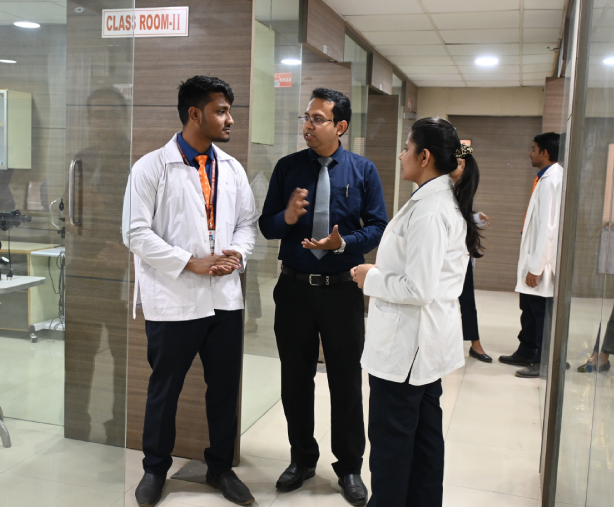
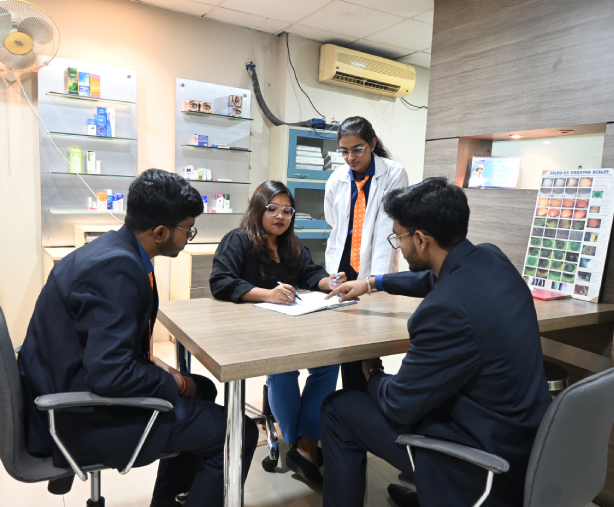
- Patient eye examination in NSHM’s eye clinic.
- Renowned ophthalmologists from ZEISS conduct a training programme for students on ophthalmology and eye care, offering practical skills and specialized knowledge. This collaboration also provides placement and internship opportunities, enabling students to gain real-world experience and enhance their career prospects.
- All students are eligible for International Certification from Lincoln University College, Malaysia.
Curriculum
Semester-wise syllabus PDF
 Semester - 1
Scholarship
Eligible students may also avail government and statutory scholarships as applicable. The scholarship framework at NSHM aims to promote inclusive education, academic excellence, and equal access to quality learning.
Terms and eligibility criteria apply as per institutional guidelines.
Highlights/ Advantage
-
Growing eye care demand in healthcare profession
-
Global opportunities in academics and research
-
Diverse career pathways
-
Competitive salary
Teaching Pedagogies
-
01
Learner-Centric Pedagogy
The learning environment prioritizes student engagement through active learning strategies and personalized learning pathways, encouraging critical thinking and self-directed growth.
-
02
Outcome-Based Education (OBE)
Programmes are structured around clearly defined outcomes using CO–PO mapping and rubrics-based assessments, ensuring measurable learning achievements aligned with academic and industry standards.
-
03
Experiential & Applied Learning
Students gain hands-on exposure through industry expert lectures, lab- and studio-based work, and application-oriented assignments that bridge theory with practice.
-
04
Technology-Enabled Teaching
Teaching is enhanced with smart classrooms, Learning Management Systems (LMS), and advanced digital tools that promote interactive, blended, and flexible learning.
-
05
Research-Based Teaching
Students are encouraged to explore inquiry-driven learning through research projects, literature review work, and exposure to contemporary research methodologies.
-
06
Problem-Based Learning (PBL)
Real-world relevance is built through case studies and project-based learning, enabling students to solve practical problems collaboratively and creatively.
-
07
Collaborative Learning
Learning is strengthened through group tasks, teamwork, and peer assessment, fostering communication skills, leadership, and mutual learning.
-
08
Skill & Competency-Based Teaching
Alongside academics, students are trained through professional certifications, soft-skill development, and employability-focused modules to enhance career readiness.
-
09
Inclusive Teaching Practices
NSHM promotes equitable learning with bridge courses, academic support systems, and structured student mentoring to cater to diverse learner needs.
-
10
Continuous Assessment & Feedback
Student progress is monitored through assignments, quizzes, presentations, and practical evaluations, supported by timely and constructive feedback.
-
11
Community & Social Learning
Learning extends beyond the classroom through outreach programmes, community engagement, and extension activities that instill social responsibility.
-
12
Faculty Development & Pedagogy Training
Faculty members regularly participate in Faculty Development Programmes (FDPs), pedagogy training, and research workshops to ensure teaching excellence and innovation.
Clinical Optometrist:
- Perform comprehensive eye examination at hospital and opticals, diagnose and manage eye conditions
- Prescribe corrective lens like spectacles or contact lens, therapeutic management including vision therapy, low vision rehabilitation and prosthesis
Research: Conduct research to advance the field of vision science, developing new equipment or treatments.
Academia: Educate and train the next generation of optometrists in academic institutions.
Entrepreneurship: Private Practice Owner: Start and manage your own optometry or optical practice. Launch innovative eye care businesses, such as mobile clinics or AI-driven diagnostic platforms.
Public health: Work on community health programmes and initiatives to provide eye care services to underserved populations.