


Programmes
Masters in Nutrition & Dietetics
-

Postgraduate Level
-

2 Years Duration
 Download Brochure
Overview
The MSc in Dietetics and Nutrition programme is designed to develop advanced nutrition professionals, clinical dietitians, and public health nutrition experts. The course integrates scientific nutrition, clinical dietetics, therapeutic nutrition, food science, and research-based practice to address contemporary health and lifestyle challenges.
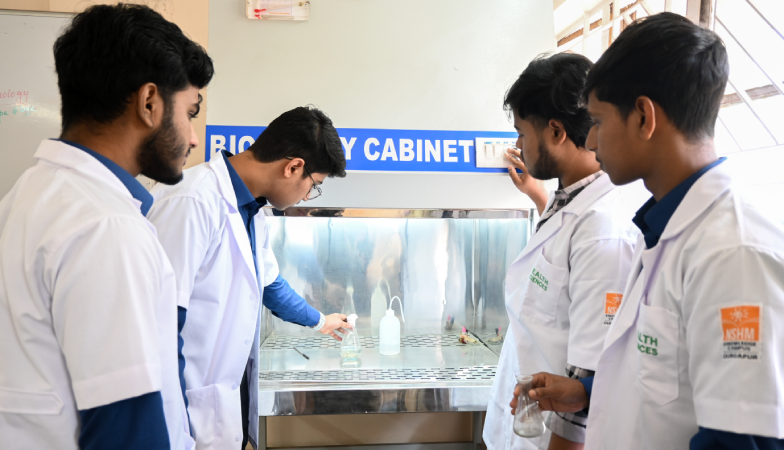
The programme emphasizes a strong balance of theory, practical training, clinical exposure, and research, enabling students to design evidence-based nutrition interventions for individuals and communities. Learners gain hands-on experience through nutrition laboratories, hospitals, community health programmes, case studies, internships, and research projects, ensuring real-world readiness.
With guidance from experienced faculty and industry experts, the programme prepares graduates for impactful careers in clinical nutrition, hospitals, wellness and fitness industries, public health organizations, NGOs, food and nutrition research, and healthcare management. The curriculum also builds a solid foundation for doctoral studies, research roles, and global opportunities in nutrition and health sciences.
The programme nurtures professionals who are scientifically competent, ethically grounded, and socially responsible, ready to contribute meaningfully to preventive healthcare and nutrition-led wellness solutions.
Eligibility
Passed Bachelor of Nutrition and Dietetics (Honours)/ B.Sc Nutrition and Dietetics (Honours)/ B.Sc.
Food and Nutrition in Regular mode from recognised university.
Admission via university entrance exams.
PG entrance criteria requires to be compulsory registered member of NCAHP.
Programme Educational Objectives
Graduates of this program will:
-
01
Professional Excellence
Graduates will apply advanced knowledge of dietetics, clinical nutrition, and research methodologies to excel as competent professionals in healthcare, community nutrition, academia, and the food industry.
-
02
Research, Innovation & Leadership
Graduates will demonstrate leadership and innovation by designing and implementing evidence-based nutrition interventions, developing new dietary strategies, and contributing to scientific advancements in clinical and community nutrition.
-
03
Ethical & Social & Global Responsibility
Graduates will practice dietetics with professional ethics, cultural sensitivity, and social responsibility, promoting sustainable nutrition and contributing to national and global health priorities.
Programme Outcomes (PO)
-
01
Nutritional Science Knowledge: Apply advanced knowledge of human nutrition and dietetics in clinical and community settings.
-
02
Nutritional Assessment- Conduct nutritional assessment, diagnose dietary problems, and plan effective diet-based interventions.
-
03
Communication Skills- Communicate dietary advice effectively with patients, caregivers, healthcare professionals, and communities.
-
04
Leadership & Team work- Work collaboratively in multidisciplinary healthcare and research teams, demonstrating leadership and accountability
-
05
Ethics & Professional- Adhere to ethical, legal, and professional standards in clinical and public health nutrition practice.
-
06
Cultural & Global Awareness- Recognize the influence of cultural, social, and global factors on dietary practices and nutrition.
-
07
Innovation & Technology- Integrate technological tools and innovative methods in dietary planning, clinical practice, and nutrition education.
-
08
Research & Data Analytics- Utilize biostatistics, research methods, and critical appraisal skills to generate and apply evidence in dietetics..
-
09
Sustainability & Policy- Advocate for sustainable nutrition practices and contribute to health and nutrition policies at local and global levels.
Programme Specific Outcomes (PSO)
-
01
Execute community nutrition assessments, develop intervention strategies, and evaluate outcomes.
-
02
Apply advanced techniques in food analysis, diet planning, and nutritional diagnostics.
-
03
Manage food service operations including menu planning, quality assurance, and nutrition surveillance.
-
04
Formulate scientifically accurate therapeutic diets for clinical disorders across various specialties (ICU, endocrine, renal, GI, paediatrics).
Key Facts
- Two-year postgraduate program focusing on advanced nutrition science and therapeutic dietetics.
- Eligibility: B.Sc. in Nutrition/Dietetics/Food Science or relevant Life Science disciplines.
- Curriculum covers advanced human nutrition, medical nutrition therapy, clinical biochemistry, and public health nutrition.
- Hands-on learning through compulsory clinical internship and hospital-based dietetics training.
- Research-focused programme including dissertation, case studies, and scientific writing skills.
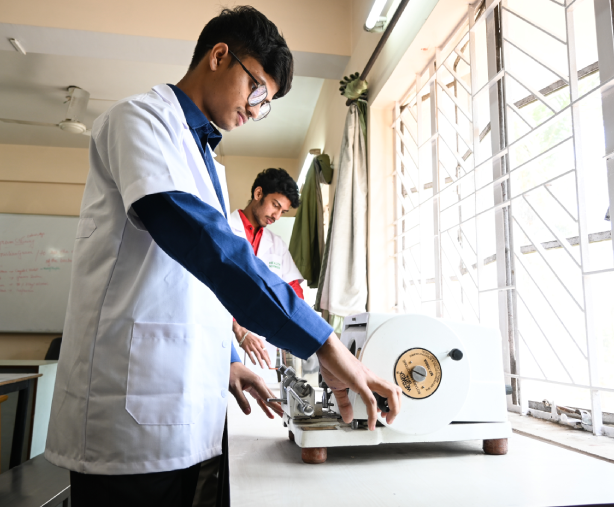
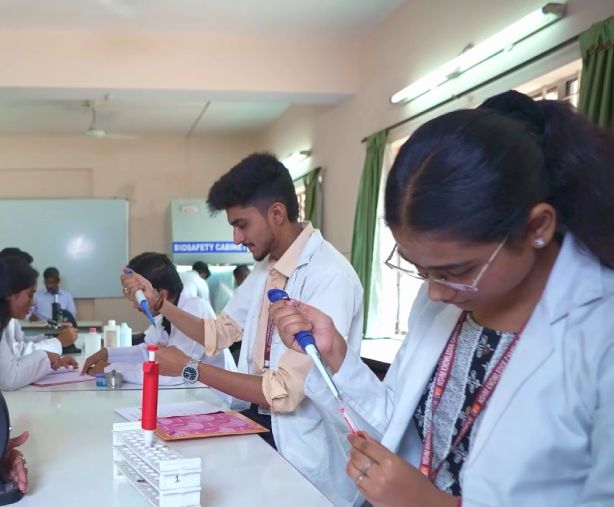
- State-of-the-art laboratory exposure for food analysis and nutritional assessment.
- Strong industry interface through seminars, workshops, and expert lectures by dietitians and clinicians.
- Career pathways in clinical nutrition, hospitals, wellness centres, research institutes, and food industries.
- Opportunities for higher studies such as Ph.D., and specialization courses in dietetics and public health.
Curriculum
Semester-wise syllabus PDF
 Semester-1
Scholarship
Eligible students may also avail government and statutory scholarships as applicable. The scholarship framework at NSHM aims to promote inclusive education, academic excellence, and equal access to quality learning.
Terms and eligibility criteria apply as per institutional guidelines.
Highlights/ Advantage
-
Advanced, research-driven curriculum focused on clinical nutrition, therapeutic dietetics, and public health nutrition.
-
Extensive hands-on learning through hospital postings, case studies, and dietary counselling sessions.
-
Dedicated nutrition laboratory facilities for food analysis, anthropometry, and metabolic assessments.
-
Opportunities to participate in nutrition camps, seminars, workshops, and industry collaborations.
-
Strong mentorship support for dissertation, research paper writing, and career pathways in clinical and industrial sectors.
Teaching Pedagogies
-
01
Learner-Centric Pedagogy
The learning environment prioritizes student engagement through active learning strategies and personalized learning pathways, encouraging critical thinking and self-directed growth
-
02
Outcome-Based Education (OBE
Programmes are structured around clearly defined outcomes using CO–PO mapping and rubrics-based assessments, ensuring measurable learning achievements aligned with academic and industry standards
-
03
Experiential & Applied Learning
Students gain hands-on exposure through industry expert lectures, lab- and studio-based work, and application-oriented assignments that bridge theory with practice.
-
04
Technology-Enabled Teaching
Teaching is enhanced with smart classrooms, Learning Management Systems (LMS), and advanced digital tools that promote interactive, blended, and flexible learning.
-
05
Research-Based Teaching
Students are encouraged to explore inquiry-driven learning through research projects, literature review work, and exposure to contemporary research methodologies.
-
06
Problem-Based Learning (PBL)
Real-world relevance is built through case studies and project-based learning, enabling students to solve practical problems collaboratively and creatively.
-
07
Collaborative Learning
Learning is strengthened through group tasks, teamwork, and peer assessment, fostering communication skills, leadership, and mutual learning.
-
08
Skill & Competency-Based Teaching
Alongside academics, students are trained through professional certifications, soft-skill development, and employability-focused modules to enhance career readiness.
-
09
Inclusive Teaching Practices
NSHM promotes equitable learning with bridge courses, academic support systems, and structured student mentoring to cater to diverse learner needs.
-
10
Continuous Assessment & Feedback
Student progress is monitored through assignments, quizzes, presentations, and practical evaluations, supported by timely and constructive feedback.
-
11
Community & Social Learning
Learning extends beyond the classroom through outreach programmes, community engagement, and extension activities that instil social responsibility.
-
12
Faculty Development & Pedagogy Training
Faculty members regularly participate in Faculty Development Programmes (FDPs), pedagogy training, and research workshops to ensure teaching excellence and innovation.
Scope & Career Opportunities
Graduates of M.Sc. Dietetics & Nutrition can build careers as:
- Clinical Dietitian in hospitals, nursing homes, and multispecialty clinics
- Nutritionist in wellness centres, fitness studios, and health clubs
- Community Nutrition Officer in government and NGO health programmes
- Food Quality Analyst in food processing and manufacturing industries
- Sports Nutritionist for athletes and sports organisations
- Research Associate in nutrition labs and public health projects
- Academic roles such as Lecturer or Tutor after higher studies
- Corporate Wellness Consultant for IT firms and corporate sectors
- Entrepreneur – Private diet clinic, nutrition consultancy, or online coaching
- Public Health Nutritionist
- Research Fellow
FAQ's
A postgraduate programme focused on clinical dietetics, nutrition science, and public health.
Industry-oriented curriculum with clinical exposure, research focus, and expert faculty.
Yes, it prepares students for hospitals, wellness centres, and therapeutic nutrition roles.
Clinical nutrition, therapeutic dietetics, public health nutrition, and research methodology.
Yes, with hands-on lab work, hospital exposure, internships, and case studies.
Clinical Dietitian, Nutrition Consultant, Public Health Nutritionist, and Research Associate.
Yes, students undertake research projects and evidence-based nutrition studies.
Yes, in nutrition counselling, lifestyle management, and preventive healthcare.
Yes, through industry linkages, internships, and professional mentoring.
Apply through a transparent, merit-based admission process with academic counselling.