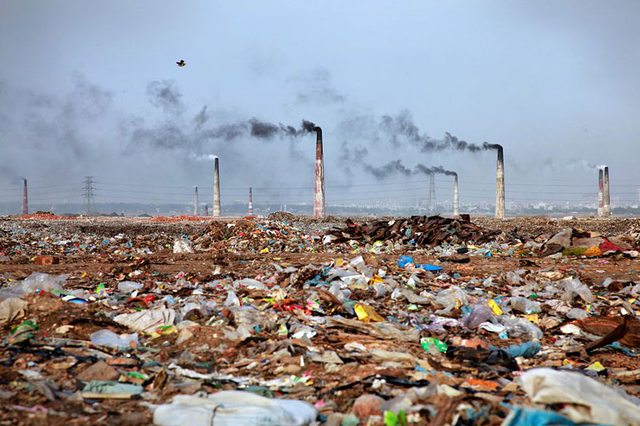



Do not vanquish mother nature, love her! – by Prof. Debanjan Banerjee

In the year 2020 under the frightening Covid situation the world has witnessed something very
positive pertaining to environment. The world has comprehended #Nine extreme affirmative vibes and ushered a new hope. 1. Carbon emissions are down While social distancing has definitely resulted in some social and economic challenges for many, it also seems to be improving our air quality since travel has decreased across the board significantly. Researchers in New York are reporting early results, saying that carbon monoxide levels produced by cars has decreased 50% in comparison to this time last year. China and Italy have also reported significant air pollution decreases since the outbreak. 2. Pablo Escobar’s invasive Hippos are helping the planet The famous Colombian drug lord, Pablo Escobar was known to own many non-native exotic animals which he would allow to roam around his compound in Colombia. These many animals included wild hippos, which over the years multiplied from four to eighty. Due to their similarities in diet and grazing habits, researchers are now wondering if these hippos are filling ecological holes from the extinct llama-like animal, the Hemiauchenia paradoxa.
3. Wales to plant a huge national forest Wales announced the government-led, $5.9 million project to create a National Forest in order to preserve nature, improve biodiversity, and sequester carbon from the atmosphere. Other goals include their "commitment to tackling climate change." The plan is set to plant on 5,000 acres of land each year to eventually increasing to 10,000 acres per year in order to hopefully meet their mark of reducing carbon emissions by 80% by 2050. 4. Dutch man cleans rivers in addition to oceans cleanup efforts The young engineer Boyan Slat made history when he removed two shipping containers worth of garbage from the Great Pacific Garbage Patch. He has now set his sights on going to the source of water pollution, the world's most polluted rivers. With his organization The Ocean Cleanup, Slat decided to include rivers in their mission after research revealed that, "1,000 of the world’s rivers are responsible for depositing 80% of all the trash that is currently swirling in the ocean." 5. Scientists close to creating artificial photosynthesis Scientists are on the cusp of being able to use artificial photosynthesis to generate renewable energy from the carbon dioxide in our atmosphere. If created in large amounts, this could be a crucial step towards mitigating climate change. 6. New research finds human ancestor lived in trees The ancient human ancestor is believed to date back about 3.67 million years. Nicknamed Little Foot, was believed to take shelter and sleep in trees in order to avoid run ins with saber-toothed cats and other predators. A new discovery occurred this month in regards to how Little Foot was able to move her head and how the movements are different than how we as humans can move it today. 7. Restoring soils could remove 5.5 billion tonnes of CO2 a year Like trees, soil health has been starting to get some much needed attention. And of course the two go hand in hand. A new study concludes that restoring a protecting our soil could remove the equivalent of the United States' annual greenhouse gas emissions. The benefits gained from soil restoration includes water regulation, water quality, stabilizing production, and resilience in ecosystems. 8. Global efforts on ozone help reverse southern jet stream damage Due to international cooperation in phasing out ozone depleting chemicals, the southern jet stream is returning to its normal state. This is great news because it is evidence that some climate systems are capable of healing when governments agree to make positive environmental changes.
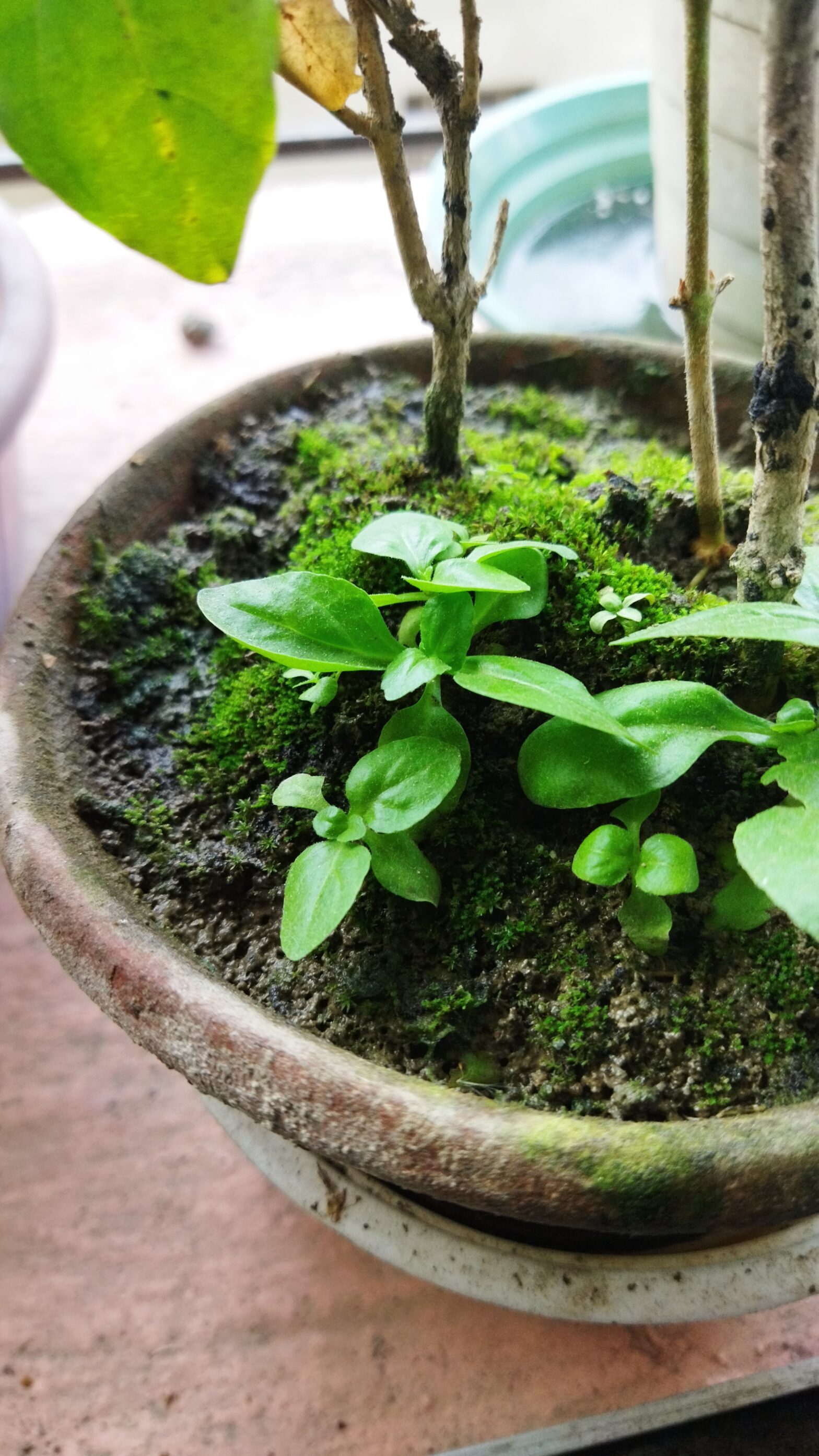
9. UK plants a “Tiny Forest” The United Kingdom has planted a tiny forest said to be the first of its kind in Oxfordshire. The little forest will consist of 600 trees and will be about the size of a tennis court. The forest is intended to not only benefit the environment but to inspire others to plant their own little forests around the world. "We hope to inspire individuals, businesses and government to take environmental action, by supporting a tiny forest in their local area." Episode of Hope in Indian perspective Now, the story from the world’s most poplous democracy and the land that is bestowed upon by the abundance of nature. The story of that great son of mother India who relentlessly fought to save and protect environment till his last snuffle. Stood as a savior of environment and outnumbered the inflictors despite all kind of intimidations. The saga of Sunderlal Bahuguna – the tallest banyan tree, the pioneering and inspiring leaders of the environmental movement in India, an irreplaceable jewel for very diverse reasons. With his Gandhian background, frugal lifestyle and a grounded and cultural base in the Garhwal Himalayas, he was a contrasting figure when compared to other environmentalists or wildlife conservationists of that era who were often from urban, privileged backgrounds. During the struggle against the Tehri Dam this brought some controversies and criticisms for him, which in my opinion was somewhat misplaced. The environmental movement in many parts of India is often identified on the Left-of-Centre but to have an impact, you sometimes need icons and leaders who command respect across the political spectrum— Bahuguna was one of those figures. In 1979, during Chipko Movement one of the slogans of the movement was from a folk song: Kya hain jungle k upkar? Mitti, paani aur bayar (what are the gifts of the forest? Soil, water and air). Today, you have terms like ‘ecosystem services’ that carry the same meaning. These terms didn’t even exist back then. Bahuguna was a pioneer with respect to moving away the focus from a wildlife-centric approach to conservation that was then the norm amongst many of us, and making it directly relevant for larger environmental aspects as well as the livelihoods of people. In fact, when nobody even dreamt about such environmental pollution, his clairvoyance clicked, and he started working as a doctor to eradicate the environment’s main ailments – saving soil, water and air from venomous pollution. Bahuguna drew our attention to the importance of Himalayan forest, especially oak-dominated forests, and the role the greens played in maintaining the health of local agriculture and water resources for local communities. So this link between healthy agriculture and healthy forests, and
between healthy forests and healthy hydrological systems is something that we learnt from the Chipko Movement and in Bahuguna’s company. That has left an impact. Sunderlal’s long march from Kashmir to Kohima, the march across the Himalayas an attempt to make his local struggles and discourse pan Himalayas. His focus, however, remained in the western Himalayas in the region now the state of Uttarakhand. His ashram in Silyara is an inspiration to so many people who visited the place and learnt about the Chipko Movement. Bahuguna referred to the fragility of the Himalayas— that we probably shouldn’t have the type of conventional roads in Himalayas that we have elsewhere. He believed smaller villages should be connected with very well-made footpaths linked to few roads. What he said with respect to the hazards of road-building by cutting through mountain slopes is now so relevant, consider the Char Dham project and the widening of the roads and repeated hazards that the Himalayas are facing, like extreme rainfall events and landslides. He was probably the earliest voices that warned us against these dangers, specifically in relation to conservation and sustainable development in the Himalayas. This greatest Padma Vibhushan warrior against all kind of environmental cruelty lost his battle in Covid on May 21, this year at the age of 94, but, ushered a new era of hope, positivity and awareness that we have to save our mother at any cost from those greedy inhumane – make them realize “We cannot eat Money” Finally, amidst this positivity, let us take an oath – Stop Pollution Is The Best Solution…