




 Download Brochure
Overview
The Bachelor of Pharmacy (B.Pharm) programme at NSHM Institute of Pharmaceutical Technology is a comprehensive undergraduate course designed to develop skilled, ethical, and industry-ready pharmacy professionals. We are one of the best B Pharma colleges in West Bengal and the programme combines strong foundations in pharmaceutical sciences with extensive laboratory-based practical training, preparing students to meet the evolving demands of the healthcare and pharmaceutical sectors.
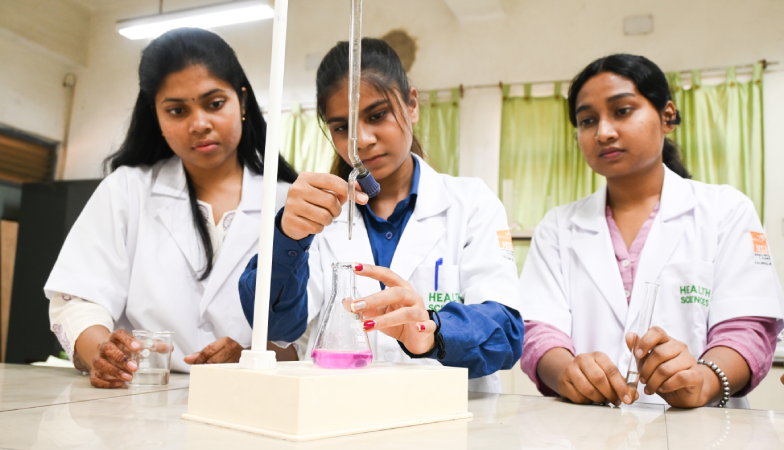
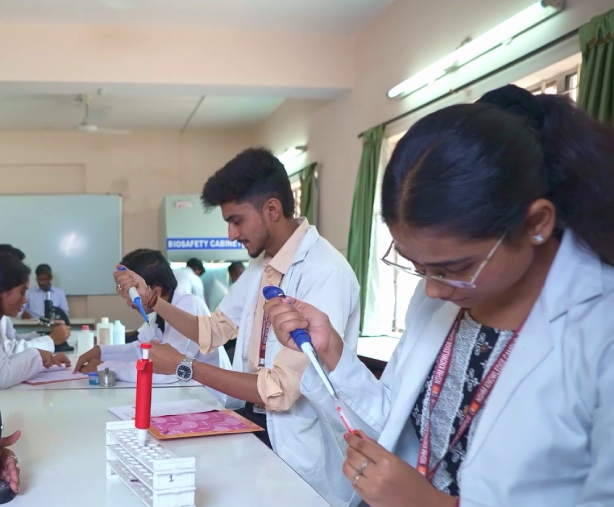
The curriculum is industry-oriented and regulation-compliant, with focused learning in pharmaceutics, pharmacology, pharmaceutical chemistry, pharmacognosy, quality assurance, and drug safety. Students gain hands-on exposure through advanced pharmaceutical laboratories, industrial training, internships, and research-oriented projects, ensuring practical competence alongside theoretical knowledge.
With an emphasis on patient safety, regulatory standards, research aptitude, and professional ethics, the B.Pharm programme equips graduates for careers in pharmaceutical manufacturing, quality control, clinical research, healthcare services, and regulatory affairs. Guided by experienced faculty and supported by modern infrastructure, the programme also lays a strong foundation for higher studies, research, and global career opportunities.
The B.Pharm at NSHM nurtures professionals who are prepared to contribute meaningfully to healthcare innovation and the pharmaceutical industry, both in India and internationally.
Eligibility
10+2 passed in science stream.
Candidate shall have passed 10+2 examination conducted by the respective state/central government authorities recognized as equivalent to 10+2 examination by the Association of Indian Universities (AIU) with English as one of the subjects and Physics, Chemistry, Mathematics (P.C.M) and or Biology (P.C.B / P.C.M.B.) as optional subjects individually. Any other qualification approved by the Pharmacy Council of India as equivalent to any of the above examinations.
Programme Educational Objectives
Graduates of this program will:
-
01
Develop strong foundational knowledge and practical competence in pharmaceutical sciences to perform effectively in pharmacy practice and the pharmaceutical industry.
-
02
Apply scientific principles, modern tools, and regulatory standards in areas such as drug formulation, quality assurance, quality control, and patient safety.
-
03
Demonstrate ethical responsibility, professional integrity, and social accountability while contributing to healthcare and community well-being.
-
04
Pursue successful careers in pharmaceutical industries, hospitals, clinical research, regulatory affairs, or related healthcare sectors, both nationally and globally.
-
05
Engage in lifelong learning through higher education, research, professional development, and adaptation to emerging trends in pharmacy and healthcare innovation.
Programme Outcomes (PO)
-
01
Pharmacy Knowledge
Apply knowledge of pharmaceutical sciences, biomedical sciences, and healthcare practices to solve problems related to drug development, quality, and patient care.
-
02
Planning Abilities
Plan, design, and implement pharmaceutical processes and healthcare solutions in compliance with regulatory and professional standards.
-
03
Problem Analysis
Identify, analyze, and interpret complex pharmaceutical and clinical problems using scientific and analytical approaches.
-
04
Modern Tool Usage
Utilize modern pharmaceutical instruments, analytical tools, and information technologies relevant to pharmacy practice and research.
-
05
Leadership Skills
Demonstrate leadership, teamwork, and managerial skills in professional practice, healthcare settings, and multidisciplinary environments.
-
06
Professional Identity
Uphold professional roles and responsibilities of pharmacists in pharmaceutical industries, hospitals, community pharmacies, and regulatory organizations.
-
07
Pharmaceutical Ethics
Practice pharmacy with ethical principles, legal compliance, patient safety, and social responsibility.
-
08
Communication
Communicate effectively with healthcare professionals, patients, and stakeholders through clear oral, written, and digital communication.
-
09
The Pharmacist and Society
Contribute to community health, public awareness, and rational use of medicines to improve healthcare outcomes.
-
10
Environment and Sustainability
Recognize the environmental and sustainability aspects of pharmaceutical manufacturing, waste management, and healthcare practices.
-
11
Lifelong Learning
Engage in continuous professional development, research, and lifelong learning to adapt to evolving pharmaceutical and healthcare needs.
Programme Specific Outcomes (PSO)
-
01
Pharmaceutical Formulation & Manufacturing
Apply principles of pharmaceutics and pharmaceutical technology to develop, manufacture, and evaluate safe, effective, and quality drug formulations.
-
02
Quality Control & Regulatory Compliance
Perform pharmaceutical analysis and quality assurance activities using standard instruments and comply with national and international regulatory guidelines.
-
03
Clinical & Patient-Centric Practice
Demonstrate competency in pharmacology and clinical pharmacy to support rational drug use, patient counselling, and medication safety.
-
04
Research & Innovation
Undertake basic and applied research in pharmaceutical sciences, including formulation development, drug analysis, and data interpretation.
-
05
Professional Ethics & Lifelong Learning
Exhibit ethical pharmacy practice, effective communication, teamwork, and readiness for lifelong learning, higher studies, and professional growth.
Key Facts
By the end of the program, students will be able to:
- Curriculum Focus : Pharmaceutics, Pharmacology, Pharmaceutical Chemistry, Pharmacognosy, Quality Assurance & Drug Safety.
- Learning Approach : Theory + intensive laboratory-based practical training.
- Industry Exposure : Internships, industrial visits, and industry interaction programmes
- Career Pathways : Pharma manufacturing, QC/QA, clinical research, hospitals, regulatory affairs, sales & marketing
- Higher Study Options : M.Pharm, Pharm.D, MBA (Healthcare), Clinical Research & Regulatory Affairs.
- Facilities : Advanced pharmaceutical labs, quality control instrumentation, digital classrooms, research support.
- Faculty : Experienced academicians and industry-trained professionals.
Scholarship
Eligible students may also avail government and statutory scholarships as applicable. The scholarship framework at NSHM aims to promote inclusive education, academic excellence, and equal access to quality learning.
Terms and eligibility criteria apply as per institutional guidelines.
Highlights/ Advantage
-
With a legacy spanning over two decades, NSHM Institute of Pharmaceutical Technology boasts top-tier global placements, offering unparalleled placement opportunities to its students.
-
Backed by central government agencies like DST, SERB, etc., our institute provides cutting-edge research facilities, fostering academic and scientific advancements.
-
Students have the opportunity to exchange knowledge, engage in intellectual discussions, and gain insights into the health-related sectors by interacting with industry experts, attending seminars and workshops.
-
Gain a profound understanding of the global transformation of the vast pharma and food industries including nutraceuticals, transitioning from traditional paradigms to the digital era.
-
Seize the opportunity to submit abstracts for oral and poster presentations, actively participating in cutting-edge research and emerging developments in the academic-industry spheres.
-
Strategic collaborations with esteemed partners ensure that students receive a comprehensive education aligned with industry standards and best practices.
-
The partnership in academics and research between the NSHM Institute of Health Sciences and Government Pharmacy College Sikkim enhances the learning journey for students.
-
The Indian Pharmaceutical Association plays a crucial role in fostering the interface between industry and academia, thereby significantly contributing to the development of healthcare professionals and the advancement of the pharmaceutical industry.
Teaching Pedagogies
-
01
Learner-Centric Pedagogy
The learning environment prioritizes student engagement through active learning strategies and personalized learning pathways, encouraging critical thinking and self-directed growth.
-
02
Outcome-Based Education (OBE)
Programmes are structured around clearly defined outcomes using CO–PO mapping and rubrics-based assessments, ensuring measurable learning achievements aligned with academic and industry standards.
-
03
Experiential & Applied Learning
Students gain hands-on exposure through industry expert lectures, lab- and studio-based work, and application-oriented assignments that bridge theory with practice.
-
04
Technology-Enabled Teaching
Teaching is enhanced with smart classrooms, Learning Management Systems (LMS), and advanced digital tools that promote interactive, blended, and flexible learning.
-
05
Research-Based Teaching
Students are encouraged to explore inquiry-driven learning through research projects, literature review work, and exposure to contemporary research methodologies.
-
06
Problem-Based Learning (PBL)
Real-world relevance is built through case studies and project-based learning, enabling students to solve practical problems collaboratively and creatively.
-
07
Collaborative Learning
Learning is strengthened through group tasks, teamwork, and peer assessment, fostering communication skills, leadership, and mutual learning.
-
08
Skill & Competency-Based Teaching
Alongside academics, students are trained through professional certifications, soft-skill development, and employability-focused modules to enhance career readiness.
-
09
Inclusive Teaching Practices
NSHM promotes equitable learning with bridge courses, academic support systems, and structured student mentoring to cater to diverse learner needs.
-
10
Continuous Assessment & Feedback
Student progress is monitored through assignments, quizzes, presentations, and practical evaluations, supported by timely and constructive feedback.
-
11
Community & Social Learning
Learning extends beyond the classroom through outreach programmes, community engagement, and extension activities that instil social responsibility.
-
12
Faculty Development & Pedagogy Training
Faculty members regularly participate in Faculty Development Programmes (FDPs), pedagogy training, and research workshops to ensure teaching excellence and innovation.
Scope & Career Opportunities
Career Opportunities after B.Pharm
- Pharmaceutical Manufacturing & Production Work in drug formulation, production planning, and manufacturing operations in pharmaceutical companies.
- Quality Control (QC) & Quality Assurance (QA) Ensure drug safety, quality standards, compliance, and regulatory adherence in pharma industries.
- Clinical Research & Trials Roles such as Clinical Research Associate, Data Coordinator, and Trial Manager in CROs and research organizations.
- Hospital & Community Pharmacist Provide patient-centric medication management, counselling, and drug dispensing in hospitals and pharmacies.
- Regulatory Affairs Handle drug approvals, documentation, compliance, and liaison with regulatory authorities like CDSCO and FDA.
- Pharmaceutical Sales & Marketing Careers as Medical Representative, Product Executive, or Brand Manager in pharma and healthcare companies.
- Research & Development (R&D) Engage in drug discovery, formulation development, and laboratory research.
- Pharmaceutical Analysis & Drug Testing Opportunities in analytical labs, testing centres, and quality labs.
- Entrepreneurship & Start-ups Start retail pharmacies, wholesale distribution, pharma consultancy, or healthcare ventures.
- Higher Education & Global Opportunities Pursue M.Pharm, Pharm.D, MBA (Healthcare), Clinical Research, Regulatory Affairs, or international studies and careers.
Future Scope
With continuous growth in pharmaceutical manufacturing, biotechnology, clinical research, healthcare services, and regulatory compliance, the demand for qualified pharmacy professionals remains strong. Emerging areas such as pharmacovigilance, clinical data management, biosimilars, and regulatory science further enhance long-term career prospects. A B.Pharm degree offers job stability, global mobility, and opportunities for advancement, making it a rewarding and future-proof career choice.
FAQ's
Yes, the programme follows Pharmacy Council of India (PCI) norms and is offered through a recognized university framework.
Key subjects include Pharmaceutics, Pharmacology, Pharmaceutical Chemistry, Pharmacognosy, Clinical Pharmacy, and Industrial Pharmacy.
Graduates can work as pharmacists, quality control analysts, clinical research associates, medical representatives, drug safety officers, or pursue higher studies.
Yes, graduates can opt for M.Pharm, Pharm.D (Post Baccalaureate), MBA (Pharma/Healthcare), or research programmes.
Yes, B.Pharm graduates can work in hospital pharmacy, clinical pharmacy, and patient care services.
Students receive career guidance, internships, industry interaction, and placement support in pharmaceutical and healthcare sectors.
NSHM offers modern laboratories, experienced faculty, industry-oriented learning, and strong academic support for pharmacy students.