


Programmes
Master of Business Administration (MBA)
-

Postgraduate Level
-

2 Years Duration
 Download Brochure
Overview
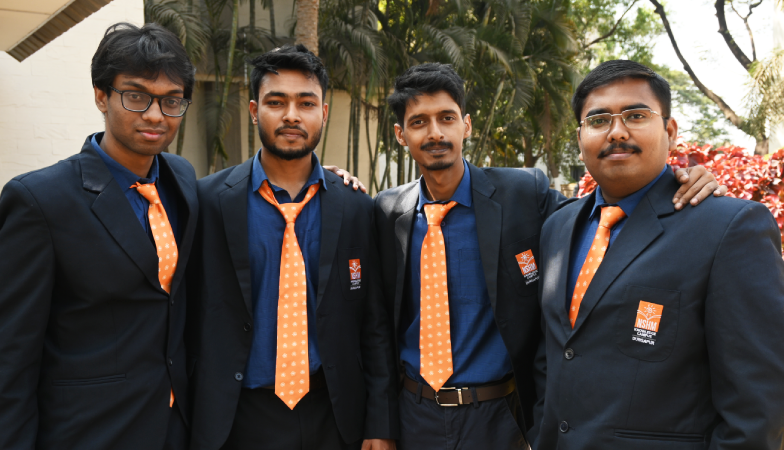
NSHM Business School Durgapur is one of the pioneers in the Management education in the Eastern India. MBA at NSHM is a premium course for Two years that is aimed to give the students best of the market requirements with its dynamic teaching and learning pedagogy.
The skill for management education is presently market driven and MBA at NSHM has been shaping the young minds and career over the years to prepare the students accordingly. Started since 2008, there are now more than one thousand alumni who are shinning in their careers at the corporate world, entrepreneurship and business.
The changing government policy and the holistic approach of education now a days has also changed the delivery of learning in MBA. Students are getting hands on exposure of the real world through Industry Visits, Corporate Lectures, Educational Tours, Study Tours, Internships and Competitive Events. This makes the students to learn and grow as a better individual and perform the best of their abilities during Placements.
MBA at NSHM offers its students to choose their own area of specialization and trains them according to the corporate requirements. The students also get a great Cultural exposure as NSHM has its own Cultural Clubs which conducts various events round the year and makes the life of the students learning with joy. Thus, MBA at NSHM gives the students to learn, grow and perform that makes their future sustainable.
Eligibility
A bachelor's degree in any discipline
A bachelor's degree in any discipline from a recognized university and must qualify for an entrance exam like JEMAT or a valid score in other accepted tests like CAT or MAT
Specialization
Specialization Tracks Include:





Programme Educational Objectives
Graduates of this program will:
-
01
Professional Excellence
Graduates will acquire strong analytical, quantitative, and decision-making skills in financial management, enabling them to excel in diverse roles such as financial analysts, investment managers, bankers, and consultants.
-
02
Leadership & Innovation
Graduates will demonstrate ethical behavior, integrity, and social responsibility in all financial and business dealings, ensuring sustainable and transparent financial practices.
-
03
Ethical & Social Responsibility
Graduates will practice ethical decision-making, uphold social responsibility, and promote sustainable management practices for long-term stakeholder trust.
Programme Outcomes (PO)
-
01
Business Knowledge:
Apply knowledge of management theories and practices to solve complex business problems.
-
02
Critical Thinking:
Analyze business situations critically, identify and define problems, and develop evidence-based solutions.
-
03
Effective Communication:
Communicate effectively in a business context, both orally and in writing, to present ideas and strategies clearly and persuasively.
-
04
Leadership and Teamwork:
Function effectively as an individual, and as a member or leader in diverse teams, and in multidisciplinary settings.
-
05
Ethical and Social Responsibility:
Recognize and evaluate ethical, legal, and social responsibilities in business decision-making and promote good governance.
-
06
Global and Cross-Cultural Perspective:
Understand and appreciate global and cross-cultural perspectives and their impact on business.
-
07
Entrepreneurship and Innovation:
Identify entrepreneurial opportunities and leverage innovation and digital transformation for business growth.
Programme Specific Outcomes (PSO)
-
01
Application of Management Knowledge
Apply principles of management, economics, accounting, and quantitative techniques to solve functional business problems.
-
02
Ethical and Social Responsibility in Business
Evaluate managerial decisions in light of ethical, legal, and social responsibilities, ensuring good governance and corporate sustainability.
-
03
Strategic Leadership and Innovation
Demonstrate leadership, teamwork, and entrepreneurial skills by formulating innovative and sustainable business strategies.
Key Facts

Core Learning Areas
- Financial Management: Corporate finance, investments, risk analysis, valuation
- Teaching Approach: Consumer behavior, brand management, market strategy
- Human Resource Management: organizational behavior, leadership, motivation
- Operations & Supply Chain: logistics, process management, quality control
- Strategic Management: business policy, competitive analysis, decision models
- Business Analytics: data-driven decision making, forecasting, AI & digital trends
Graduate Attributes (Aligned with AICTE)
MBA graduates are expected to demonstrate:
- Business Knowledge - Apply management theories in real-world situations.
- Critical Thinking - Analyze and solve complex business problems.
- Effective Communication - Present ideas persuasively in writing and speech.
- Leadership & Teamwork - Collaborate effectively in diverse environments.
- Ethical Responsibility - Make socially responsible and sustainable decisions.
- Global Perspective - Understand international business dynamics.
- Innovation & Entrepreneurship - Drive creative solutions and business ventures.
Career Opportunities
Graduates with an MBA are employed in both corporate and entrepreneurial sectors, with roles such as:
- Financial Analyst / Manager
- Marketing Manager / Brand Strategist
- HR Consultant / Talent Manager
- Operations & Supply Chain Manager
- Business Development Executive
- Management Consultant / Entrepreneur
Industry Relevance
The MBA curriculum is continually updated to reflect emerging business trends such as:
- Digital Transformation & Fintech
- Sustainability and ESG Practices
- Data Analytics & Artificial Intelligence in Business
- Global Trade & Cross-border Strategy
 Year-1
Scholarship
Eligible students may also avail government and statutory scholarships as applicable. The scholarship framework at NSHM aims to promote inclusive education, academic excellence, and equal access to quality learning.
Terms and eligibility criteria apply as per institutional guidelines.
Highlights/ Advantage
-
Masters of Business Administration Programme is one of the flagship programmes at NSHM Knowledge Campus, Durgapur. It is specifically designed to cater to the Corporate World requirements. It aims to develop the leadership, technical, managerial and entrepreneurial skills of the students.
Teaching Pedagogies
-
01
Learner-Centric Pedagogy
The learning environment prioritizes student engagement through active learning strategies and personalized learning pathways, encouraging critical thinking and self-directed growth.
-
02
Outcome-Based Education (OBE)
Programmes are structured around clearly defined outcomes using CO–PO mapping and rubrics-based assessments, ensuring measurable learning achievements aligned with academic and industry standards.
-
03
Experiential & Applied Learning
Students gain hands-on exposure through industry expert lectures, lab- and studio-based work, and application-oriented assignments that bridge theory with practice.
-
04
Technology-Enabled Teaching
Teaching is enhanced with smart classrooms, Learning Management Systems (LMS), and advanced digital tools that promote interactive, blended, and flexible learning.
-
05
Research-Based Teaching
Students are encouraged to explore inquiry-driven learning through research projects, literature review work, and exposure to contemporary research methodologies.
-
06
Problem-Based Learning (PBL)
Real-world relevance is built through case studies and project-based learning, enabling students to solve practical problems collaboratively and creatively.
-
07
Collaborative Learning
Learning is strengthened through group tasks, teamwork, and peer assessment, fostering communication skills, leadership, and mutual learning.
-
08
Skill & Competency-Based Teaching
Alongside academics, students are trained through professional certifications, soft-skill development, and employability-focused modules to enhance career readiness.
-
09
Inclusive Teaching Practices
NSHM promotes equitable learning with bridge courses, academic support systems, and structured student mentoring to cater to diverse learner needs.
-
10
Continuous Assessment & Feedback
Student progress is monitored through assignments, quizzes, presentations, and practical evaluations, supported by timely and constructive feedback.
-
11
Community & Social Learning
Learning extends beyond the classroom through outreach programmes, community engagement, and extension activities that instill social responsibility.
-
12
Faculty Development & Pedagogy Training
Faculty members regularly participate in Faculty Development Programmes (FDPs), pedagogy training, and research workshops to ensure teaching excellence and innovation.
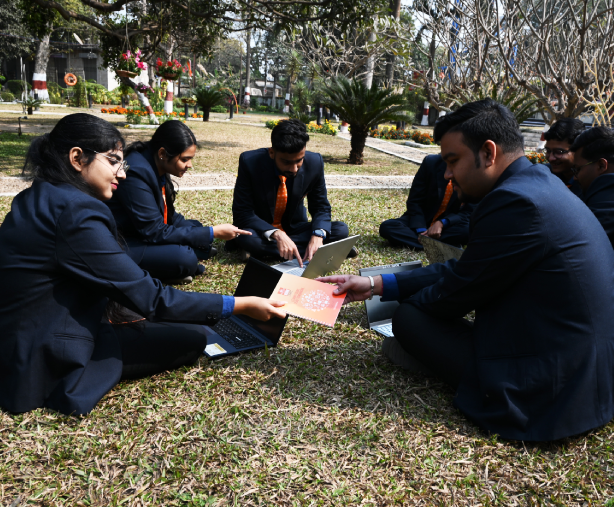
- Placement is esteemed companies like Ambuja, Reliance, Adani, TCS, Cognizent, Bandhan Bank
- Specialized training sessions for training for the interview
- Mock GD Sessions for cracking the interviews
- Training and internship opportunities with esteemed companies across India
- Industrial visits to major companies across India.
- Workshops at IITs and IIMs